Pages

Showing posts with label school. Show all posts

Buddy Bench Aware Programmes


Buddy Bench Ireland
Our Buddy Bench Aware programmes are school-wide social and emotional learning programmes that helps children manage their behaviour, develop empathy and compassion, build positive social relationships, and understand and cope with their feelings. Children have taught us their needs and milestones change dramatically throughout the school duration, therefore our team of psychotherapists have designed four different age appropriate programmes.

  • Little Buddies age pre-school 3-6
  • Buddy Bench Aware age 7-9
  • Buddy Bench Hero age 9-12
  • Buddy Bench Post Primary 12+
All children deserve good mental health. That's why we have adapted our school programmes for children with Special Educational Needs.
We use a Buddy Bench as a visual tool to help instil much needed lifelong coping skills which is the objective of our Buddy Bench Aware programme. Our thoroughly researched program has been designed by our team and in-house psychotherapist Judith Ashton BA ITEC MFPhys IMTA, who has over 30 years expertise in her field. For the younger children the story in our interactive workbook, written by our Creative Consultant Jeffrey Gormly and illustrated by the very talented Ross Stewart of Cartoon Saloon. It is a story with animals and each animal represents a thought or a feeling but is creative and innovative , being open ended leaving so much to the individual child's imagination. Through our research if a buddy bench is placed in playground without a program it very quickly becomes an attractive climbing frame.

We, as a team of psychotherapists physically visit the school or organisation, our programmes are designed to allow and encourage a child to "feel a feeling" or to "think a thought" we know it is vital that a trained person is present and can identify a situation or problem if it arises, they will then flag a teacher/worker so they can decide if further intervention via the school or the organisation is required.

We are connected with the Ir​​ish Men's Sheds on a national level, you can source a bench through them for a cost of approximately €150  which includes a donation to each of the sheds. www.menssheds.ie

Book our team to come to your school and deliver our Buddy Bench Aware programmes which entwines heavily with SPHE. Each sessions is 45 mins in duration which consists of reading our story, role play and/or games which is delivered by our trained staff. Each pupil receives his/her own copy of the interactive workbook to be completed at school or even with the help of their family at home.

"A state of well-being in which the individual realises his or own abilities, can cope with the
normal stresses of life, can work productively and fruitfully and is able to make a contribution to
his or her own community". (WHO, 2001, p.1)

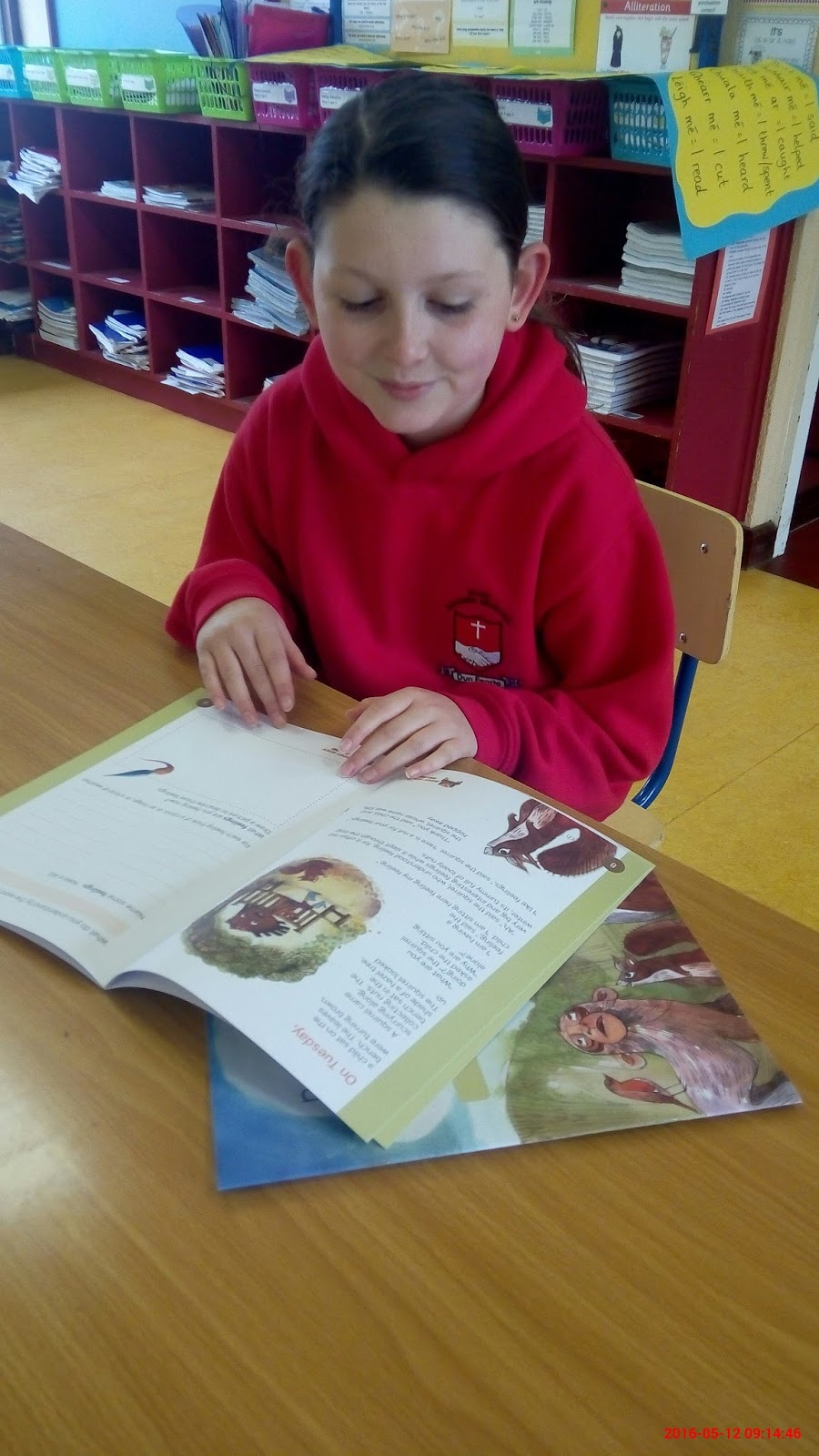
Some of the photos of us Buddy Benchers delivering the "Buddy Bench Aware" programme. These bright as buttons children really got the messages behind the story and really embrace it.

The ethos behind our program is :

LOOK UP, LOOK AROUND, LOOK OUT FOR EACH OTHER


Buddy Bench Ireland


Buddy Bench Ireland

Buddy Bench Ireland

Buddy Bench Ireland

“We have begun to see positive changes in behaviour, better use of problem solving conversations, reduced discipline incidents, and improved feelings of safety from bullying among our children,” said  Lydia Coyne.

After implementing the programme, children knew techniques to solve problems with classmates and ways to “cool off” and manage anger-related emotions." said  Michelle Coleman


Helping Your Child Cope with Back-to-School Anxiety


We don't want to acknowledge the fact that summer is nearing an end and we must at least start thinking of returning to school. Not only the young children who are starting school/pre-school may begin to feel anxious, lets face it is the topic of conversation, but older children and teens. Do you remember starting a new job?

Anxious feelings are normal and expected during times of transition or change.  This transition can be stressful and disruptive for the entire family! Prior to the first day of school, your anxious child may cling, cry, have temper tantrums, complain of headaches or stomach pains, withdraw, and become sullen or irritable.Worries are Common. Anxious children and teens worry about many different school-related issues, such as teachers, friends, fitting in, and/or being away from their parents. Some common worries include:


Who will be my new teacher?
What if my new teacher is mean?
Will any of my friends be in my class?
Will I fit in?
Are my clothes OK?
Will I look stupid?
Who will I sit with at lunch?
What if I miss the bus?
What if I can’t understand the new schoolwork?
What if something bad happens to mum or dad while I am at school?


Although it is normal for your child to have worries, it is crucial to make your child attend school. Avoidance of school will only increase and reinforce your child’s fears over the long-term, and make it increasingly more difficult to attend

Most importantly, anxious children and teens who miss school cannot gather evidence that challenges their unrealistic and catastrophic fears.

How To Deal With Back-to-School Worries!

Below are some general strategies parents can use to deal with back-to-school worries, followed by a schedule leading up to the first day of school.

Look after the basics.
Nobody copes well when they are tired or hungry. Anxious children often forget to eat, don’t feel hungry, and don’t get enough sleep. Provide frequent and nutritious snacks for your child. During this time, you also need to build in regular routines, so that life is more predictable for your child. These routines can involve the morning and bedtime habits, as well as eating schedules.

Encourage your child to share his or her fears.

Ask your child what is making him or her worried. Tell your child that it is normal to have concerns. Before and during the first few weeks of school, set up a regular time and place to talk. Some children feel most comfortable in a private space with your undivided attention (such as right before bed, or during mealtime). Teens often welcome some sort of distraction to cut the intensity of their worries and feelings (such as driving in the car, or taking a walk).


Avoid giving reassurance...instead, problem-solve and plan! Children often seek reassurance that bad things won’t happen in order to reduce their worry. Do not assure them with “Don’t worry!” or “Everything will be fine!” Instead, encourage your child to think of ways to solve his or her problem. For example, “If (the worst) happens, what could you do?” or “Let’s think of some ways you could handle that situation.” This gives you the opportunity to coach your child on how to cope with (and interpret) both real and imagined scary situations. You will also be giving your child the tools he or she needs to cope with an unexpected situation that might arise.

Here’s a sample script for engaging your child in problem-solving and planning (instead of giving reassurance):

Role-play with your child. Sometimes role-playing a certain situation with your child can help him or her make a plan, and feel more confident that he or she will be able to handle the situation. For example, let your child play the part of the demanding teacher or bullying classmate. Then, model appropriate responses and coping techniques for your child, to help them calm down.

Focus on the positive aspects!

Encourage your child to re-direct attention away from the worries, and towards the positives. Ask your child, "What are three things that you are most excited about on your first day of school?" Most kids can think of something good, even if it's just eating a special snack or going home at the end of the day. Chances are that the fun aspects are simply getting overlooked by repetitive worries.

Pay attention to your own behaviour. It can be anxiety-provoking for parents to hand over care and responsibility of their child to teachers. Children take cues from their parents, so the more confidence and comfort you can model, the more your child will understand there is no reason to be afraid. Be supportive yet firm. When saying goodbye in the morning, say it cheerfully – once! Ensure you don’t reward your child’s protests, crying, or tantrums by allow him or her to avoid going to school. Instead, in a calm tone, say: “I can see that going to school is making you scared, but you still have to go. Tell me what you are worried about, so we can talk about it.” Chances are, your child is anxious about something that requires a little problem-solving, role-playing, planning, and/or involvement from the teacher.

Timeline Leading Up to the First Day of School
(You may not need to take all of these steps)

At least one week before:
Start your child on a school-day routine – waking up, eating, and going to bed at regular times. Explain that everyone in the family needs to adjust to the new schedule, so he or she doesn’t feel alone with these changes.
For older children who having troubles getting up and out of bed, give them a “big person” alarm clock, and let them practice using it.
Ask your child to help plan school lunches for the first week.
Create a list of school supplies together and plan a fun shopping trip.

A couple days before school:
Go to school several times – walking, driving, or taking the bus. For young children taking the school bus, describe and draw out the bus route, including where the bus goes and how long it takes to get to school. Talk about bus safety.
For new students, take a tour of the school. Show your child the classrooms the and the bathrooms. If possible, meet your child’s teacher with your child present.
Ask your child to help choose the outfits for the first week of school. Let your child wear his or her favourite outfit on the first day.
Together with your child, pack up the schoolbag the night before.
For younger children who are nervous about separating, suggest taking a special object to school that reminds him of home. A reassuring note in a child’s lunch can also help ease separation anxiety.

The first day of school:
Have your child go to school with a friend for the first couple of days.
Tell the teacher that your child is having some separation anxiety – most teachers are experts in this area, and have years of experience!
Most importantly, praise and reward your child for brave behaviour!



Our News- This Is Working

We’re working away here developing the creative materials that go along with our "Buddy Bench Aware Program".

The simplicity and openness of the story at the heart of the program invites the schoolchild’s imagination to ‘rise up’ to meet the various situations of the main character.

Through this exercise in listening and imagining, the children experience qualities of empathy and connection, and the importance of having, holding and honouring one’s own thought processes;
feeling, containing and articulating an emotional state;
knowing one’s needs, and asking for what you want;
developing an awareness that others have similar thoughts, feelings, wants and needs;
the mutual value of sharing one’s inner life;
and the already present emotional capacity of most children to engage in these exchanges.

We’re so proud of the sensitive creative innovation happening here, and of the great kids that are testing the material and guiding our efforts.


This is working!
By Jeffrey Gormly
Creative Advisor

Buddy Bench erected at Kensington’s Queen Elizabeth Elementary

Buddy Bench erected at Kensington’s Queen Elizabeth Elementary

Colin MacLean

A student at Queen Elizabeth Elementary in Kensington takes a break on the school’s new Buddy Bench. Sitting on the bench is a signal to other students that the child would like someone to play with.
A little boy sits on a bench in the middle of a playground.
He perches on the edge of the seat, his feet just barely reaching the ground.
Dozens of kids run, yell and play around him.
He seems to catch his breath for a moment, craning his head around and taking in the joyful chaos around him like only kids on a recess break can experience.
After  afew deep breaths the youngster hopped up and ran off, disappearing into the crowd of his peers.
This particular visitor apparently needed no help in finding someone to play with, but if he’d stuck around on the bench a little longer chance are someone would have come over to invite him to play.
This was no ordinary seat – this is the Buddy Bench.
The Buddy Bench is an idea that’s quickly spread to schools across Canada thanks to social media. The idea is to have a designated bench on the playground where children feeling lonely can sit as a signal to others that they would like someone to play with.
The idea recently caught on at Queen Elizabeth Elementary in Kensington, but several other Island schools either already have a Buddy Bench or are planning to build one.
Queen Elizabeth built their bench after Tammy Costain, who has one child at the school and another who’s moved on, approached them with the idea. She’d seen it on her Facebook feed.
“I thought it would be a great idea for the school here,” said Costain.
“My son is in Grade 1 and I know he has his group of friends and if you’re not in the group, they don’t want to let new kids in. So I talked to him about it … I said ‘what about the ones who don’t have friends?’ He said sometimes they just play by themselves – but I thought everyone should have a friend, at recess.”
Costain phoned school principal Rodney MacArthur to discuss the idea and he quickly gave it a green light to proceed.
After the bench was built, MacArthur went around to all the classes to discuss it with the students. They were happy to hear about it, he said.
“If it’s something that sounds like a good idea, we run with it,” said MacArthur.
“To me, there’s no bad that can come from a buddy bench – though my hope is that the bench wouldn’t be used a whole lot,” he added.
But it’s there if a kid needs it, and that’s something Costain is happy to see.
“It’s good, it’ll teach them a little bit of kindness. Kids just need to be friends and not be at each other … especially at that age there shouldn’t be any reason someone doesn’t have a friend,” she said.
So what do the kids think of their new playground addition?
“It’s good, because it makes me feel like these were actually my friends from whenever I was in my old school,” said Dane Mantie
Steven Pluigers said he admired it for its esthetic.
“I like the colour blue,” he said. 


'Buddy Bench' Creates A Safe Spot For Shy Classmates To Find Friends

Everyone deserves a pal on the playground.

Our Message To The World

Our Message to the World

Buddy Bench Ireland sees a future where the health of each child is nurtured and cultivated throughout the school years. The values we cultivate with the Buddy Bench Awareness Program include creativity, mindfulness and communication as core competencies that support each child to build personal resilience. The Buddy Bench Aware Program is oriented around Thinking and Feeling: having confidence in the value that each person brings through their own uniqueness; & Finding a voice and Listening: the social value of self-expression, empathy, and mutual understanding. Supporting the capacity of children is one leg of the stool that supports an emotionally and mentally healthy economy. The other two legs are the willingness of the school to gather around the child with a challenge, and work together with the child, parents and others to find initiatives that help the situation; and the expertise, and readiness to listen and learn, of the organisations that appropriately resource and support the school to cultivate mental and emotional well-being. We pride ourselves on being one of those organisations. We are learning every day how to better deliver our value to classrooms and playgrounds. We want to bring the Buddy Bench, and our creative Awareness Program, to every school child in Ireland!

by Jeffrey Gormly
Creative Advisor

Carlow Mens Shed Interview with Helen from Nationwide

Helen McInery from RTE Nationwide interviewing Michael from Carlow Mens Shed about our partnership.


Two Camera Crews Today November 5th 2015


Well, didn’t we have an exciting day on November 5th 2015. The weather may have been dull and wet,
but inside Danesfort National School was bright with excitement – children, teachers, parents, all eagerly awaiting not one but TWO camera crews – one from RTE, filming a segment for RTE Nationwide and the other from Glass Eye Productions, who are making the first Buddy Bench Ireland promo video for our crowd funding campaign.


We will be crowd funding to bring our "Buddy Bench Aware" program within reach of every primary schoolchild in Ireland, this takes funding to say the least.


The kettle was boiling, the cakes were laid out, and the school was abuzz!
Congrats to Danesfort NS, the pioneers of the Buddy Bench Aware Program! soon you will see yourselves on the television, be very proud you were fantastic. Thank you to the students, fantastic teachers Muinteor Helen and Muinteor Natalie and the parents for their co-operation. Anne and Parent Committee for the "too nice" cakes. We had a very special guest appearance of the former head master Mr. Joe Hickey.


Judith reading the story of the child on the bench, the teaching fable at the heart of our workshop;

Helen from RTE interviewing the children from Muinteor Natalie’s class;

Sam explaining the story of the Buddy Bench Movement while children ran and laughed around their playground at break-time.


Muinteor Helen’s Class taking full energetic part in the games and exercises with Jeffrey Gormly our creative Advisor, that develop the creativity, confidence, mindfulness and communication skills that form the core of the "Buddy Bench Aware" Program. Jeffrey wrote our "Buddy Bench Aware" story that we use for the interactive workbook for every child who takes part in the program. It consists of animals and each animal represents a coping skill will feel will benefit the child for the rest of it's life. Through our research we found the early invention is key.

We use a buddy bench as a visual tool alongside the paediatric-psychologist-designed "Buddy Bench Aware" program, we want to reach every primary school children in Ireland. We want to help them release the stigma of asking for help, celebrate the children who act with compassion, kindness empathy and encourage them in developing conflict-management skills, thus relieving anxiety, stress and feelings of isolation.


Then off to the Men’s Shed Carlow for more filming – the lovely men there are going to make the benches
that we roll out as part of our initial pilot program in the South East! It is fantastic we have the support of this initiative. we feel we are bringing two elements of the community together in a very positive way. Plus these guys are great fun.!


The two Michael s are based in the Carlow Mens Shed, this is a hive of activity you can feel the energy and the talent and craftsmanship has to be seen to be believed. I hear they do a great "Fry Up" on a Thursday lunchtime. They told me that was a big secret!


We want to roll this initiative out nationally as it entwines heavily with the SPHE program (Social Personal and Health Education) in the primary school curriculum.

Help us so we can deliver the Buddy Bench Aware Program to every primary school child in Ireland, forming a happier society and the voices of our younger children  heard.

It’s a movement, and we’re moving fast!

Get in touch by email buddybenchmovement@gmail.com
Like us on Facebook
Follow us on Twitter


Donate, and support the delivery of Buddy Bench Aware Programs in a school near you!

Kait's Angels adds Buddy Bench

Kait’s Angels adds Buddy Bench to Aquebogue Elementary School


buddy_bench2
Kait’s Angels, a North Fork organization created in memory of Kaitlyn Doorhy, donated a new “Buddy Benches” on Friday at Aquebogue Elementary School.
Students from first to fourth grade gathered for an assembly as the Buddy Bench was officially unveiled.
Darla Doorhy, Kaitlyn’s mother, said elementary schools at Riley Avenue, Oysterponds, New Suffolk, Southold and Greenport will all be receiving a Buddy Bench.
“It’s pretty special because it is the first one Kait’s Angels is doing as an organization on the North Fork,” she said.
A second grader from York, Penn., first created the Buddy Bench idea after deciding to help lonely classmates at his school’s playground.
Lisa Fox, the president of Mattituck Cutchogue PTA, pitched installing a Buddy Bench locally last year as a way for students to come together when they might otherwise feel alone. In November 2014, the “Kaitlyn Doorhy Memorial Buddy Bench” was unveiled at Cutchogue East Elementary School.
Kait’s Angels picked up the idea from there.
Aquebogue principal Phil Kent, who said he knew Kaitlyn from living in Cutchogue, said she was an example of living life to the fullest.
“She loved to be amongst friends and kids,” he said.
During the assembly, he spoke to the students about what the bench represented.
“You can use it and access when you are looking for a buddy or to sit down and calm down,” he said. “You can say I need a friend today.”
Kaitlyn was a 2012 Mattituck High School graduate, honor student, varsity soccer player, accomplished musician, cheerleader, volunteer and 2011 Mattituck Strawberry Queen who died at the age of 20 in 2014 when she was struck by car near her sorority house at Sacred Heart University in Fairfield, Conn.
Top Photo Caption: Kait’s Angels board members Laurie Italia (from left), Mary Lou Araneo, and Kait’s parents Darla and Joe Doohry. (Credit: Barbaraellen Koch)
See more photos of the Buddy Bench below:
Aquebogue Elementary School third and fourth graders in the cafeteria for the "Buddy Bench" assembly Friday afternoon. (Credit: Barbaraellen Koch)
Aquebogue Elementary School third and fourth graders in the cafeteria for the “Buddy Bench” assembly Friday afternoon. (Credit: Barbaraellen Koch)
Fourth graders Samantha Davis and Ja'Dah William became friends Friday at recess. Samantha told the principal Phil Kent she was having trouble making friends. (Credit: Barbaraellen Koch)
Fourth graders Samantha Davis and Ja’Dah William became friends Friday at recess. Samantha told the principal Phil Kent she was having trouble making friends. (Credit: Barbaraellen Koch)
The "Buddy Bench" in honor of Kaitlyn Doorhy. (Credit: Barbaraellen Koch)

RTE Nationwide's Visit

We are so excited to have Nationwide ‪#‎RTE‬ visit us tomorrow. Hairs washed, shoes polished uniforms ready to go for all the children of our pilot Buddy Bench Aware programme Danesfort National School,‪#‎Kilkenny‬. These children are amazing and are loving the limelight at the minute. Early nights for us all tonight, we are so proud of you all, our star lite Buddy Benchers.

Photos Too Follow!

Our Visit to Leinster House

Yesterday October 28th we were invited to meet with Minister Kevin Humphreys to discuss Buddy Bench Ireland. We received good advice as too move forward. Personally I was proud to be Irish because people of all walks of life, teachers, shop owners, small businesses and our politicians are supporting us.  I am confident we can teach EVERY primary school child in Ireland.

WELL-BEING IN PRIMARY SCHOOLS


This is the "Foreword" of the Department of  Education and Skills document "Well Being in Primary Schools" we are delighted to have this framework in place as our "Buddy Bench Aware" programme sure does compliment it. This is an interesting read for anyone because the action we take to promote the welfare of children and protect them from harm – is everyone’s responsibility. Everyone who comes into contact with children and families has a role to play.The ‘duty of care’ needs to be at the forefront of those adults’ minds, who are working with children.

Read more: https://www.education.ie/en/Publications/Education-Reports/Well-Being-in-Primary-Schools-Guidelines-for-Mental-Health-Promotion.pdf


We are pleased to jointly publish these Guidelines, which will provide practical guidance on how primary schools can promote mental health and well-being. We know that the mental health and well-being of our children is critical to success in school and life. Education about mental health and well-being is an integral part of the school curriculum. Schools play a vital role in the promotion of positive mental health in children. Schools can also provide a safe and supportive environment for building life skills and resilience and a strong sense of connectedness to school. Listening to the voice of the child and fostering healthy relationships with peers, teachers and school staff are essential to children’s positive experience of school and their cognitive and emotional development. The needs and well-being of school staff are also of paramount importance. The key to successful implementation of these Guidelines lies in taking a coordinated whole-school approach. This involves building and integrating school self-evaluation processes, implementing all elements of the Social, Personal and Health Education (SPHE) curriculum, adopting the National Educational Psychological Service (NEPS) Continuum of Support, and building effective inter-agency relationships. The whole-school implementation of the SPHE curriculum framework at classroom and whole-school levels supports the effective delivery of mental health and well-being education. Positive mental health is further reinforced through the strong working partnerships fostered between the Department of Education and Skills (DES), Department of Health (DoH), Department of Children and Youth Affairs (DCYA) and the Health Service Executive (HSE). Links between the education and health sectors may be further strengthened through the development of the health promoting school model to support a whole-school approach to mental health promotion and well-being. Identifying and supporting children who may be vulnerable or at risk are key to successful mental health promotion and suicide prevention. These Guidelines provide a practical framework for supporting schools in this challenging area and also build on the significant work currently undertaken in schools. Mental health promotion and the provision of supports for vulnerable students depend on ongoing cooperation between schools and the range of available services and agencies from the education, health and community sectors. We hope that these Guidelines will be of assistance to schools and the school community in supporting and responding to the mental health and well- being needs of our children. Finally, we would like to thank all those who contributed to the production of these Guidelines.

 Jan O’Sullivan,   TD                                                                               Kathleen Lynch, TD 
Minister for Education and Skills                                                             Minister for Mental Health