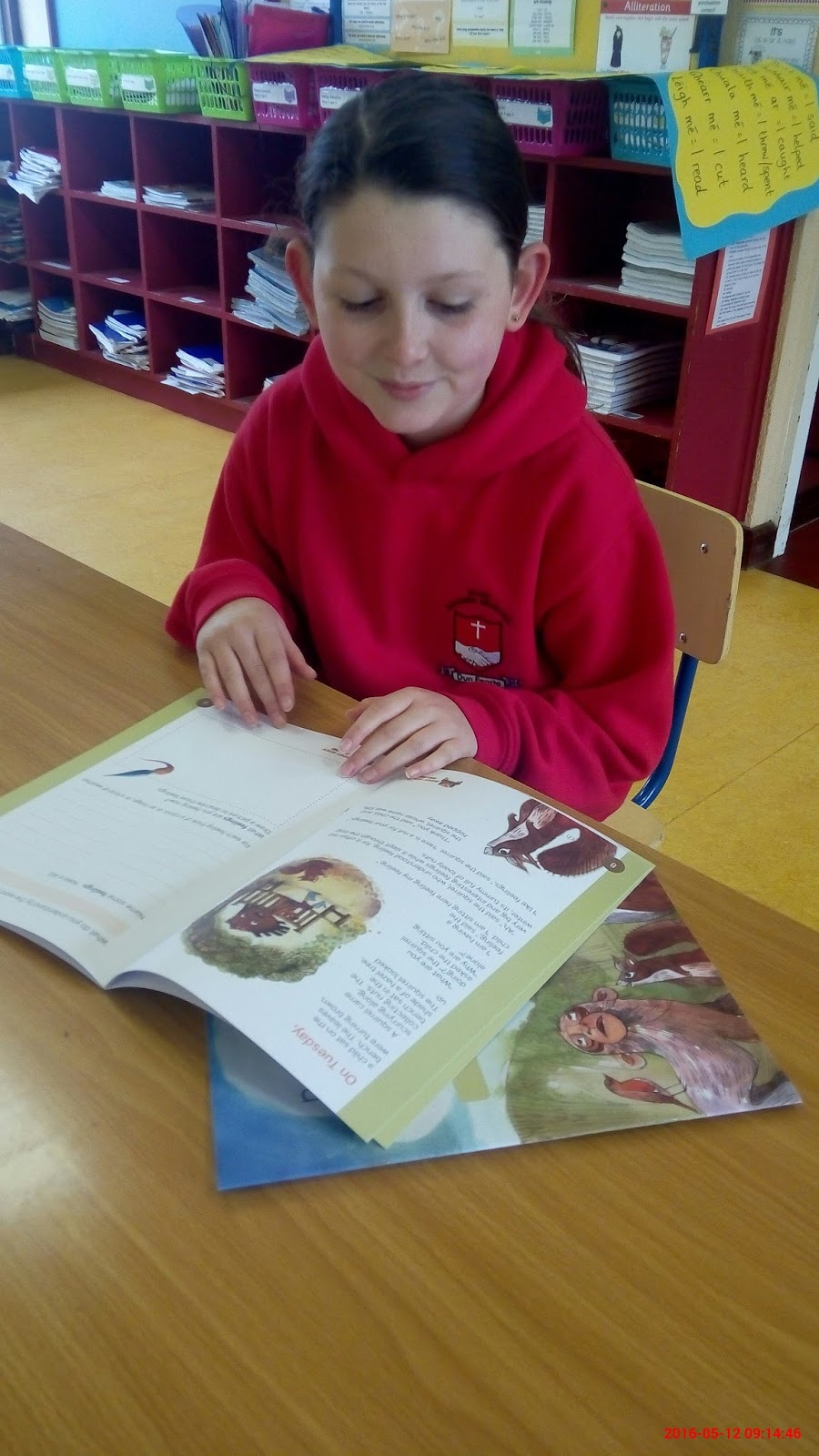
The school environment can be stressful; in addition to any issues children bring from home, as children grow older they become extremely sensitive to their place in peer groups. At the same time, a greater awareness of the larger world around them can cause children to become vulnerable to anxiety.
At this age, friendships are key to a child’s self image, and the responsibility of becoming a role model to younger children in the school can bring out the best in the senior classes in a school.
The Workshop
You are a Hero! Friendship: How can you be a good friend to others?
You can’t be there for others if you don’t take care of yourself first!
Children are extraordinarily observant, and as they move outward into the world they want to take responsibility for their own wellbeing and that of other people, animals, the environment and so on.
Through discussion and role-play we introduce the idea that a real hero has self-awareness, can understand their own feelings and cultivate positive habits of thought, cares for their own mental health, knows their own strengths and develops skills to match, asks friends how they are doing, and knows how to listen well.
The You are a Hero! Activity Book gives tools for personal and social resilience, and invites children to become members of our Hero Club, ambassadors for friendship and self-fulfilment as they move towards adolescence.
"There is a page in the back of this workbook we ask the children to fill in and send back to us to receive their You are a Hero badge and a to be chance of winning a bigger prize, this can be done on an individual basis or as a class project. We want to hear the children's' voices we need their feedback."
The feedback from our programmes is very promising – we are currently completing an evaluation with the Mental Health Social Research Unit at NUI Maynooth. According to teachers’ ratings, children show more empathy and kindness and a greater ability to calm themselves down when they feel upset. Their social and emotional development has improved, the children showed improvement in the ability to think flexibly, and had cultivated the life skills that have been linked to health and success in later life.
Combined with the Buddy Bench as a visual tool in times of distress, the children were able to find comfort and support through each other rather than feeling upset and worried. It’s these small changes, spread across classrooms, that could make society more kind—and educate a new generation of more compassionate and connected adults.
In this workshop we ask that there be a small number of pre-chosen Buddy Ambassadors chosen from 6th class approx. 2 per hundred other students in the school., they can alternate. Their role will be to look after the younger children and monitor the Buddy Bench is being used correctly (within reason). Through our own internal evaluation we have found the more responsibility the children are given the better the outcomes.
To book us to come to your school and deliver any of our programmes email: hello@buddybench.ie
As part of Social Entrepreneur Ireland Awardees, Judith Ashton and Sam Synnott of Buddy Bench Ireland appeared on the Ray D'Arcy TV Show on February 8th 2017
In our series "if there was a buddy bench in my school", well known and definitely well loved Irish comedian PJ Gallagher tells Judith Ashton why it would have been good for him.
This is a very powerful message about Parent Alienation: undeserved anger towards a previously loved parent during or following a separation or a divorce, written by Brian O'Sullivan.
To the child who said "I don't need my father (mother) I would reiterate the importance of having the love and care of both parents. I only hope that you as a child, adolescent or adult will yet realise the importance of not just one but both parents before it is too late.
Do not blame yourself for what has happened in the past. The fault was not with you, but rested elsewhere as is so clearly explained on this site. Make amends now, by seeking that loving contact you denied yourself when you truly needed this. The parent you have rejected will welcome you back with open arms and a loving heart.
Marital breakdown has become a significant social phenomenon in Ireland. The Central Statistics Office describe an increase of 150% in the rate of marital breakdown in Ireland over the past ten years (2011)
The Courts Service of Ireland describes 2,273 court orders, granted in relation to gaurdianship and a total of 1,738 court orders granted, in relation to custody and access during 2011. These figures do not reflect the number of parents who did not have the financial, emotional or psychological resources to go through the court process.
I wanted one life,
you wanted another,
We couldn't have our cake,
So we ate each other (Mc Gough)
The experience of children being caught in the crossfire between divorcing parents is not new to Ireland. What is new however, is the views of the child are now given more status. This may have presented us with a new dynamic through which the child may be drawn further, into the painful divorce process.
One emerging phenomenon that faces families, social workers, judges and mental health professionals relates to cases where a child venomously rejects and denigrates a previously loved parent, during or following a high conflict divorce or separation.
The purpose of this paper is to introduce, for consideration, some of the contributions made by a number of author's to explain this phenomonen, to identify clinical presentations of an alienated child and to identify the impact of alienation on children.
Some legal and mental health professionals may be superficially child centered. If the child indicates they want nothing to do with a parent, with whom they have had a previously happy relationship. Some of these professionals may conclude the child's views are valid, must be respected and acted upon.
In these circumstances, there is a need to understand a child's strident rejection of one parent in terms of an enhanced inclusive framework rather than simple parental inadequacy (Lavandara, 2012) The research shows us, issues around parental attachment and estrangement are complex and do not lend themselves to easy answers. There is a large body of literature around this issue , Baker, (2010), Fidler & Bala (2010) Friedlander & Walters (2010) Johnston (2003) Kelly & Johnston (2001), Loweinstein (2010) and Warshak (2010) This suggests an intense interest around this issue.
A number of terms have been put forward, to explain this phenomenon such as parental alienation syndrome, alienated child, parental alienation (no syndrome), divorce related malacious mother syndrome, over burdened child, medea syndrome, parental alignments, programmed and brain washed children (Rand, 2011) regardless of which label is chosen. There is widespread agreement among experts in the international family law and mental health arena, as to the existence of a distinctive cluster of divorce related symptoms in a child that may result in psychological disturbance for that child.
Andre (2004) describes alienation as an observable constellation of hateful behaviours on the part of a child, who venomously rejects and directs undeserved anger towards a previously loved parent during or following a separation or a divorce.
Walters & Olsen (2005) conclude, child alienation is partially explained by the alienating behaviours on the part of an emotionally needy aligned parent, who is in role reversal with the child and who offers the child warm, and involved care in exchange for his or her allegiance.
Bernet et al (2010) suggest, a primary feature of alienation is where a child, usually one, whose parents are engaged in a high conflict divorce or separation allies himself or herself strongly with one parent and rejects the other parent without legitimate justification. For Bernet et al, a primary behavioural symptom is of a child, who refuses contact with a parent and is characterised by extreme withdrawal or contempt.
While it is agreed, parental programming may have a causal factor and that the child may make an active contribution to this dynamic. There is somewhat less agreement in relation to the role of the aligned and the rejected parent and the kinds of interventions that may be utilised.
There are multiple factors, both within the marriage and the separation, such as age, developmental level, psychological vulnerability of the child, the behaviours or personalities of both parents, sibling dynamics, the remarriage situation, and the adversarial nature of the custody battle to explain why some children reject a parent (Johnston, 2003)
It is important to distinguish alienated children from those who demonstrate differential preferences for one parent, based on expectable and normative reasons. (Kelly & Johnson, 2001)
Some children have good reason to be hostile or avoidant towards a parent. This is viewed as realistic estrangement, whereas a alienated child is described as expressing freely and persistently, unreasonable, negative beliefs, which are disproportionate to the child's actual experience with that parent.
Andre (2004) provides a number of questions or a checklist to aid in establishing the presence or absence of alienation. They are,
Is there or was there a high conflict divorce/separation or a protracted battle in relation to custody and access?
Is the child's anger, hatred or rejection disproportionate to any "crime" the parent is accused of?
Did the child have a loving relationship with the now rejected parent?
Is the rejection accompanied by extreme resistance to visit the rejected parent?
Does the child shun the parent in public?
Do the child's perceptions lack duality? Are they black and white?
Does it seem there is only "bad" in the rejected parent with no gratitude or affection for the parent?
Are the child's reasons for rejection of a parent scripted, lacking substance or accurate detail?
Has the child added to or embellished the script with his or her own contributions to the rejected parent's badness?
Doed the child insist, he or she has not been influenced by anyone, but that he/she has independently chosen his or her own actions, behaviour and opinions?
Does the child protect and idealise the aligned parent?
Do the actions of the aligned parent suggest an agenda of anger, negativity or destructiveness towards the rejected parent?
Does the child appear to be functioning normally in other settings, but on closer inspection, has other problematic interpersonal relationships?
Is there a distinct lack of guilt or remorse on the part of the child?
Kelly & Johnston (2001) provides us with a typical clinical presentation of an alienated child. They argue, this presentation is consistent with the observations of a child's behaviours and emotional responses as reported by others such as Gardner (1992) and Wallerstein & Kelly, (1980)
They describe, extreme disproportion between the child's perceptions or beliefs about the rejected parent and the actual history of the rejected parents behaviours and the parent-child relationship. The alienated child freely expresses hatred and an intense dislike for the rejected parent which contrasts with most estranged children. They demonise and vilify the rejected parent, they frequently point to trivial reasons to justify their hatred and they are usually not shy about broadcasting the percieved failings of the rejected parent to others. The child cannot see duality, is unable to put the good and bad qualities of a parent together. In the child's mind there is only bad.
Common behaviours, that have been identified, as consistent with that of an alienated child, is their strong resistence to contact with the rejected parent, their absolute refusal to see the parent in any setting and their determination to end the child-parent relationship. They strongly articulate their right, to choose, not to have contact with the rejected parent. They insist this decision is theirs and theirs alone.
Other common behaviours identified are around the child's story. Their allegations about the rejected parent are mostly identical to that of the aligned parent's allegations and stories. The story is scripted and repeated endlessly with little or no underlying detail to support the allegations, unlike children with true histories of abuse or neglect. The alienated child has adopted the allegations. The alienated child's story sounds rehearsed with frequent use of adult language and phrases. There is no obvious guilt as the child continues to viciously denigrate the rejected parent.
Alienated children have been given permission to be powerful, hostile and rude to the rejected parent and his or her extended family. Even previously cherished pet, living with the rejected parent may be discarded and denigrated with proud descriptions of their new perfect replacements provided by the aligned parent (kelly & Johnson 2001)
The alienated child idealises the aligned parent. They will not contemplate any other suggestion. They may describe how the aligned parent has been harmed emotionally, physically or financially by the rejected parent.
The aligned parent may believe their child does not need the rejected parent in his or her life. The aligned parent may insist, the child is free to visit the rejected parent, however attempts to contact or visit the child are viewed as harassment. Phone calls, messages or cards are not passed on to the child. Information about school, medication, special events or sports days and such like are not passed on to the rejected parent. All references to the rejected parent are removed from the residence including pictures, which may be torn up in front of the child. Most children quickly learn not to speak of the rejected parent. The rejected parent is effectively shut out of the child's life. The aligned parent will strongly support their angry child's right to make their own decisions in relation to contact with the rejected parent.
The alienated child may present, as very distraught and angry and yet appear, at least superficially, to be functioning adequately. They present as well adjusted in other settings such as schools, sports, hobbies and such like. however the child's black and white views, coupled with harshly strident views and feelings are usually reflected in their dealings with their peers and those in authority.
The behaviour of the alienated child within the home of the rejected parent may be severely problematic. They may destroy property. They prefer to be in contact constantly with the aligned parent, frequently speaking in code, and whispering hostile observations about the rejected parent's behaviours, meals, personality and words.
When the alienated child is refusing contact with the rejected parent, all efforts by the rejected parent to communicate directly with the child will be to no avail. The alienated child may demand, the parent never contact them again. They may demand the rejected parent stop "harassing" them with presents and cards, which will likely go unopened and may be discarded. They may demand the rejected parent stop their useless legal efforts and court appearances.
Bone & Walsh (1999) provide four criteria which they suggest may be used as a guide in the process of considering the presence or absence of alienation. The first is around, the blocking of access and contact between the child and the targeted parent. Sometimes the aligned parent will cite access as being "unsettling" on the child, any deviations to schedules is used as an excuse to terminate access. Bone & Walsh suggest, access between the child and the targeted parent is relegated to a "chore". The absent parent is to be treated less like a key family member. This sends a clear but unspoken message to the child that one parent is "senior" to the other parent. This, they suggest, results in the erosion of the child's relationship with the absent parent.
The second criteria is around, unfounded allegations of emotional abuse. The authors suggest this may occur as a result of one parent allowing a child to stay up later than the other parent would, or one parent introducing the child to a "significant other" before the other parent feels they should or where one parent, enrols the child in a activity that the other person disagrees with.
These author's suggest this is a matter of simple differing parental judgement rather than emotional abuse. They suggest it is easier to allege emotional abuse as there is no physical evidence or third party witnesses.
Bone & Walsh caution against a parent who is eager to hurl allegations of abuse rather than a parent who is being cautious, careful and even reluctant to do so. They argue the latter approach is one of, a parent who is mindful of, supportive of and encouraging of a relationship between the child and absent parent. For Bone & Walsh, the responsible parent will only allege abuse after he or she has tried to rationalise why the issue at hand, is not abusive. They conclude they alienating parent will not miss an opportunity to make allegations of abuse against the absent parent.
The third criterion, provided is referred to as the deterioration of the parent-child relationship since a separation or divorce. They advocate for, a close evaluation of the pre-separation relationship between the child and now, absent parent. They suggest if this evaluation is omitted, there may be assumptions made by professionals, that the current child-parent relationship is a true reflection of the child-parent relationship. This may result in professional recommending reduced contact between the child and absent parent. This may add to the alienating process albeit, unknowingly so, on the part of the professionals.
The fourth criteria provided, is around the child's intense fear reaction. These author's suggest the child is frequently being placed into loyalty tests, thus forcing the child to choose a parent. They suggest this is characterised by the child who, begins to loudly protest when the appointed time of access arrives. The aligned parent presents, as bewildered in relation to the child's sudden change in feelings. The aligned parent will frequently appear to support the child's relationship with the absent parent. They conclude, this is an example of the child, being placed in a position to act out their loyalty to the aligned parent.
The impact of alienation on the child is well documented in the empirical literature. The inner self of the child may disappear as the child is brought up to fulfill the needs of the aligned parent. This may result in the child sacrificing their authentic desires, needs and characteristics. The inner reality of the child is likened to emotional abuse, buried beneath the hostility and rejection , the child feels the loss of a once warm and nurturing parent with guilt over their rejection (Andre,2004) Some other examples provided by Baker & Ben Ami (2011) include, diminished self esteem which is associated with overly dependent behaviour, depression, insecure attachment style, difficulties with identity development and psychosomatic illness. Children of parents in high conflict divorces experience painful loyalty conflicts which creates sadness and depression (Baker,2007 & Buchanan et al,1991)Triangulation is one of the main elements of marital breakdown that is harmful to the child's long term adjustment (Emery, 2004)
Critics of this phenomenon broadly fall into two categories (Clarkson & Clarkson, 2007) The first category, suggest the concept of alienation has been invented to excuse neglectful or abusive parenting. The second category accepts the existence of the phenomenon but disputes the scientific formulation of it. Other critics, argue it is not listed in the DSM IV (TR) and therefore it does not exist.
Supporters of the concept of alienation suggest, healthy established parental relationships do not erode on their own, they must be attacked (Bone & Walsh,1999) They suggest children do not naturally lose interest in and become distant from their non resident parent simply as a result of the absence of that parent. They argue allegations of neglect or abuse ought to be fully investigated to ensure the safety of the child. They suggest, in cases of alienation, the allegations will be unsubstantiated (Ellis & Boyan,2010). They argue, there is a crucial need to distinguish between real estrangement and alienation. They argue, to suggest alienation is not real, as it is not listed in the DSM IV (TR) is like saying AIDS did not exist in 1980 because it was not then listed in the DSM.
Mental health problems affect about one in ten children and young people. They include depression, anxiety and conduct disorder, and are often a direct response to what is happening in their lives. By teaching our children and young people about feelings, how they can effect the body and how to cope with them, can alleviate problems now and in later life.
The emotional well-being of children is just as important as their physical health. Good mental health allows children and young people to develop the resilience to cope with whatever life throws at them and grow into well-rounded, healthy adults.
Things that can help keep children and young people mentally well include:
being in good physical health, eating a balanced diet and getting regular exercise
having time and the freedom to play, indoors and outdoors
being part of a family that gets along well most of the time
going to a school that looks after the well-being of all its pupils
taking part in local activities for young people.
Other factors are also important, including:
feeling loved, trusted, understood, valued and safe
being interested in life and having opportunities to enjoy themselves being hopeful and optimistic
being able to learn and having opportunities to succeed
accepting who they are and recognising what they are good at
having a sense of belonging in their family, school and community
feeling they have some control over their own life
having the strength to cope when something is wrong (resilience) and the ability to solve problems.
Most children grow up mentally healthy, but surveys suggest that more children and young people have problems with their mental health today than 30 years ago. That’s probably because of changes in the way we live now and how that affects the experience of growing up.
Dealing with Change
Mostly things that happen to children don’t lead to mental health problems on their own, but traumatic events can trigger problems for children and young people who are already vulnerable.
Changes often act as triggers: moving home or school or the birth of a new brother or sister, for example. Some children who start school feel excited about making new friends and doing new activities, but there may also be some who feel anxious about entering a new environment.
Teenagers often experience emotional turmoil as their minds and bodies develop. An important part of growing up is working out and accepting who you are. Some young people find it hard to make this transition to adulthood and may experiment with alcohol, drugs or other substances that can affect mental health.
Risk Factors
There are certain ‘risk factors’ that make some children and young people more likely to experience problems than other children, but they don’t necessarily mean difficulties are bound to come up or are even probable.
Some of these factors include:
having a long-term physical illness
having a parent who has had mental health problems, problems with alcohol or has been in trouble with the law
experiencing the death of someone close to them
having parents who separate or divorce
having been severely bullied or physically or sexually abused
living in poverty or being homeless
experiencing discrimination, perhaps because of their race, sexuality or religion
acting as a carer for a relative, taking on adult responsibilities
having long-standing educational difficulties.
How Parents Can Help?
If they have a warm, open relationship with their parents, children will usually feel able to tell them if they are troubled. One of the most important ways parents can help is to listen to them and take their feelings seriously. They may want a hug, they may want you to help them change something or they may want practical help.
Children and young people’s negative feelings usually pass. However, it’s a good idea to get help if your child is distressed for a long time, if their negative feelings are stopping them from getting on with their lives, their distress is disrupting family life or they are repeatedly behaving in ways you would not expect at their age.
Types of mental health problem
These are some of the mental health problems that can affect children and young people. You can find out more from the Mental Health Foundation booklet Whatever Life Brings.
Professional Help
If your child is having problems at school, a teacher, school nurse, school counsellor or educational psychologist may be able to help. Otherwise, go to your GP or speak to a health visitor. These professionals are able to refer a child to further help. Different professionals often work together in Child and Adolescent Mental Health Services (CAMHS)
Our Buddy Bench Aware programmes are school-wide social and emotional learning programmes that helps children manage their behaviour, develop empathy and compassion, build positive social relationships, and understand and cope with their feelings. Children have taught us their needs and milestones change dramatically throughout the school duration, therefore our team of psychotherapists have designed four different age appropriate programmes.
Little Buddies age pre-school 3-6
Buddy Bench Aware age 7-9
Buddy Bench Hero age 9-12
Buddy Bench Post Primary 12+
All children deserve good mental health. That's why we have adapted our school programmes for children with Special Educational Needs.
We use a Buddy Bench as a visual tool to help instil much needed lifelong coping skills which is the objective of our Buddy Bench Aware programme. Our thoroughly researched program has been designed by our team and in-house psychotherapist Judith Ashton BA ITEC MFPhys IMTA, who has over 30 years expertise in her field. For the younger children the story in our interactive workbook, written by our Creative Consultant Jeffrey Gormly and illustrated by the very talented Ross Stewart of Cartoon Saloon. It is a story with animals and each animal represents a thought or a feeling but is creative and innovative , being open ended leaving so much to the individual child's imagination. Through our research if a buddy bench is placed in playground without a program it very quickly becomes an attractive climbing frame.
We, as a team of psychotherapists physically visit the school or organisation, our programmes are designed to allow and encourage a child to "feel a feeling" or to "think a thought" we know it is vital that a trained person is present and can identify a situation or problem if it arises, they will then flag a teacher/worker so they can decide if further intervention via the school or the organisation is required.
We are connected with the Irish Men's Sheds on a national level, you can source a bench through them for a cost of approximately €150 which includes a donation to each of the sheds. www.menssheds.ie
Book our team to come to your school and deliver our Buddy Bench Aware programmes which entwines heavily with SPHE. Each sessions is 45 mins in duration which consists of reading our story, role play and/or games which is delivered by our trained staff. Each pupil receives his/her own copy of the interactive workbook to be completed at school or even with the help of their family at home.
"A state of well-being in which the individual realises his or own abilities, can cope with the
normal stresses of life, can work productively and fruitfully and is able to make a contribution to
his or her own community". (WHO, 2001, p.1)
Some of the photos of us Buddy Benchers delivering the "Buddy Bench Aware" programme. These bright as buttons children really got the messages behind the story and really embrace it.
The ethos behind our program is :
LOOK UP, LOOK AROUND, LOOK OUT FOR EACH OTHER
“We have begun to see positive changes in behaviour, better use of problem solving conversations, reduced discipline incidents, and improved feelings of safety from bullying among our children,” said Lydia Coyne.
After implementing the programme, children knew techniques to solve problems with classmates and ways to “cool off” and manage anger-related emotions." said Michelle Coleman
Written by our in-house psychotherapist Judith Ashton BA ITEC MFPhys IMTA,
I recently visited an African friend of mine who has three small boys under four years old. She is a wonderful mother and I have never seen her stressed or raising her voice to her children. She appears very relaxed and unflappable. She is firm and fair with her children and they are very well behaved. At 29 years old she seems to have embraced motherhood in a very happy and fulfilled way. I have often marvelled at her poise and wondered how she manages to manage her life with three little ones. They are all energetic , they play well but are rarely over the top. Many young Irish mums with three under four would be freaking out, out of control , complaining of soaring stress levels and there would be noise and mayhem.
What is my African friend’s secret? Given , she has a wonderful partner and they are both consistent in their approach to their children but he works shifts and she is alone and housebound much of the time . How is she coping so very well?
The children have tasks that she expects them to do every day. These tasks include tidying up their toys, cleaning their teeth, laying the table, putting their used plates in the sink ( even tho they can hardly reach it!)putting on their pyjamas, going to bed when told , helping her and each other and sweeping the floor. She has gently and effectively trained her sons to do these chores . They know they have to do them and accept that it is expected of them and they will not get a treat if they don’t. A treat in this case may be: a biscuit, an apple or to watch TV. As a consequence these boys are very well behaved and polite.
When I was a child we all had chores. Many young families these days, don’t seem to . According to Richard Rende, developmental psychologist and co-author of “Raising can-do kids.”, chores benefit kids emotional, academic and even professional development. He says, “ Parents today want kids spending time on things that can bring success, but ironically, we’ve stopped one thing that’s actually been a proven predictor of success and that is household chores.”
Research shows that giving children household chores at an early age builds such qualities as self-reliance and responsibility. Professor Rossman from University of Minnesota followed a group of 84 children from pre-school to their mid 20s and she found that the ones who had done chores from the ages of 3 and 4 achieved higher academic scores, had better relationships with friends and family, earlier career success and were generally more self-reliant than the kids who had no chores or who started chores in their teens.
Another study from Richard Weissbourd of Harvard Graduate School of Education found that chores teach children about empathy and being responsive to other’s needs. He surveyed 10,000 high school children and asked them to rank achievement or happiness over caring for others. The interesting result was that 80% chose happiness and achievement over caring for others…..He says that this shows, “We’re out of balance because research suggests that most personal happiness comes not from high achievement but from strong relationships and caring for others! A good way to start readjusting priorities, is by learning to be kind and helpful at home.”
The message seems to be; do not to fixate on grades and academic achievement over and above chores . Grades are not more important than caring for others. Chores teach a child about emotional intelligence and caring , the very human qualities which in turn lead to happiness.
Ways to engage and motivate your child to do chores
In a study of 150 3 to 6 year olds published in the journal of Child Development researchers found that thanking young children for ,”being a helper” rather than, “helping” increased their desire to pitch in. This seemed to create a positive identity, eg being known as a person who helps.
It is important to schedule chores : so make a timetable and stick it on the fridge. This creates a routine along with other commitments.
Start from an early age and slowly add more responsibility.
Chores are things that do not always need rewards… they simply have to be done! Who rewards mum for doing the ironing or dad for cutting the grass ?!
Psychologists differentiate between self -care tasks e.g.; tidying your bedroom and family- care tasks e.g. Sweeping the kitchen floor or washing up. Family care tasks foster empathy for others and build sense of social responsibility. Let your child choose his/her task and then they are more likely to follow through.
Language re: chores is important when co-operation counts. There is a difference between commanding a child, ”Do your chores!” as opposed to, “Let’s do our chores.” Chores are more of a way of caring for others as opposed to a punishment.
The more we complain about housework…. So will children, so try to keep as positive as possible about what needs to be done and hopefully home life will be harmonious and everyone will be caring and happy!
I look forward to following my friend’s 3 boys over the years ahead.
Good luck and today is a good day to start with giving your child some chores around the home!
The responsibilities of a parent are possibly the biggest anyone might face in their lives. Not only are you responsible for keeping another human being alive and safe for the first stage of their life, but also for teaching them how to be healthy, happy and decent.
What most parents do not know is that until the age of about seven, they are their child’s only role-model. Your children are watching you 24/7 to figure out how to survive in this crazy world, and what behaviors and emotional responses they need to exhibit to meet their needs, such as attention, love, significance, comfort and affection.
In the case of parenting, actions speak louder than words. If you are telling your children to play fair at school and be nice, but at home you are constantly snapping at your partner, it is what you do rather than what you say that will have the bigger impact. They will either adopt the same behavior or rebel against it, neither of which are predictable.
This does not mean you have to be model parents all the time. That would be unrealistic. You are only human after all. However, being aware of your behavior in front of your children, and explaining your behavior to them in an emotionally intelligent way, are crucial. Making sure they recognize it is about you, not them, is key to bringing up emotionally healthy kids. What other habits do you need to adopt to raise happy and successful children?
1) Demonstrate independence If you want to raise independent children, you need to teach them how to be independent. This includes leading by example. Needy parents often hold their children responsible for their emotions, creating environments of psychological control: “Behave this way or mummy / daddy will be very stressed / hurt / upset.”
Children do not get the chance to explore what they like or dislike, or who they are in this kind of environment, always trying to be someone that mum or dad wants them to be. They will continue this way into their teens, and will be more susceptible to peer pressure in later life, being someone they are not just to fit in.
2) Let go of your need to controlWe all want a level of certainty in our lives, but real happiness comes from being able to live in a world of uncertainty - knowing that no matter what happens ‘out there,’ we will be OK – because in reality, we have very little control over anything.
Children brought up by over-controlling parents have been shown to have higher rates of stress and depression in later life. Believing they are incompetent, and that nothing they ever do is good enough, leads to low self-confidence and poor self-image.
3) Communicate calmly and intelligently Successful people generally have high emotional intelligence and excellent communication skills. To give your kids a head start in developing these, you need to learn how to communicate calmly and intelligently yourself. Shouting not only creates a harsh environment for your children, but also teaches them that in order to make themselves understood, they have to shout. This will not help them in their relationships later in life.
Intelligent communication is communicating how you feel without blaming the other person. “When I see or hear ‘this,’ I interpret it as ‘x’ and that makes me feel ‘y’,” is a good format to start with.
4) Be present Kids are more likely to be secure and self-assured when raised by parents who are present. Parents who spend more time on their phone, working, answering emails etc. are giving the impression their kids come second. While this might not be the case, children internalize and personalize everything. All your behavior will always be about them. Help your kids feel important by being present in their presence.
5) Be your own cheerleader If you want your kids to have healthy self-esteem, you need to show them how to be their own internal cheerleader, to recognize their own value without relying on external sources. Start by praising their accomplishments, then migrate toward showing them how to recognize their own achievements, so when they are an adult they will not still be seeking your approval or that of others.
This must be done by leading by example. How good are you at recognizing your own self-worth and accomplishments? If the answer is “not very,” look at ways you can start to develop this so you can show your children how to do it for themselves.
6) Be open and warm Successful, happy adults are generally great at forming friendships and relationships, most likely because they are open and approachable. Creating a warm, open environment for your children is crucial to their emotional wellbeing and success in later life.
Demonstrate affection and openness with your kids and partner, giving them the freedom to communicate how they feel and be who they are. This will positively impact your family, and bode well for your children’s future happiness.
7) Enjoy your children
Being a parent is a lot of work, a full time job alongside a full time job. Our work is never ending and at times this is daunting for most of us. I sometimes have no rules days, where I give myself the freedom to escape routine, throw caution to the wind, dump housework go for long walk on the beach and get a bag of chips afterwards. My daughter and I enjoy these seldom special days where we can just be, and enjoy the freedom.
I have recently delivered our Buddy Bench Aware Programmes to several Irish primary schools and have noticed a great deal of fidgeting going on. The junior and senior infants being the “worst offenders” and this activity set me wondering about fidgeting. What it is and why does it happens?
More and more children are being diagnosed as having Attention Deficit Hyperactivity Disorder. When I was a child decades ago such a label did NOT exist. How come it does now? Could fidgeting be a symptom of some deeper issue?
Years ago when my own children were small I remember thinking how un-natural it was to expect a 3 -6 year old to sit still for hours on end when the natural language of a child’s young body is movement, feeling and touch ; these are their means of exploring the world of wonders into which they have recently arrived. If you watch any nature programme about young animals they are all either moving , playing, exploring, eating or asleep…. Rarely still.
In our present state educational system, children are expected to pay attention by sitting still in an un-naturally upright position for long periods of time. Kids are naturally full of energy and quite literally have energy to burn .There are numerous natural body positions for young children eg. lying down, moving, dancing, rolling, climbing, tumbling, clowning, wrestling, jumping, skipping, hopping, spinning round, twisting, turning, falling and so on. Sounds familiar? As a kid I never walked, I ran! I was constantly in motion. These days, many children lead sedentary lives and whilst in playgrounds are banned from chasing games, running , leap-frog, skipping ropes, hop, skip and jump etc for fear of falling and litigation. Even the humble sand pit where digging and building used up energy has lost its place in childhood activities for fear of grains in young eyes!
The fact is, many children are simply not getting enough exercise. Gone are the days of the long daily bag-carrying trek to school, the parental taxi now drops kids from door to door rain or shine. Admittedly, children can be vulnerable if walking alone yet some urban schools have instigated healthy “crocodile programmes” where children and parents meet up and walk to school together. What a great idea… exercise and saving petrol all in one go!
Research from the early 1980’s shows that children back then , had good core strength and good balance because of movement and mobility. Today only 1 in 12 children has good core strength and balance. What is this telling us about our children’s developing bodies? I am convinced that it’s because they are not moving enough or getting enough exercise, and I believe that this is why many are fidgeting and getting ADHD diagnoses.
Movement is not an option for a healthy body and mind but an essential part of dailyactivity. Children need to move in a multitude of ways for most of their waking hours not just using short bursts of energy at regulated times. All young animals need to move and explore with their bodies to make sense of the world around them. Many children are walking about with very poor co-ordination due to restriction of movement. Poor hand eye co-ordination and balance issues can be improved by ball throwing and catching and lots of cross lateral movements like skipping, crawling and hopping. Organised sports sessions after school and weekends are fine but movement needs to be frequent, intense and regular. For optimum health, kids need to get out of breath, sweat and get tired out. In short they need to let of steam … this will strengthen their developing bodies and diminish build- up of emotional pressure, this is good for healthy relationships, self- esteem and encourages healthy tiredness which in turn leads to healthy sleep patterns. Exercise also oxygenates the brain making children more alert, motivated and receptive to learning.
Children who lack exercise are not able to function properly on many levels. All the systems in a child’s body crave exercise and its myriad of benefits for growth, positive stimulation and optimum function. : the child’s skeleton, the muscles, the digestive system, the nervous system, the lymphatic system etc. are all enhanced .
Inhibiting children (especially the youngest ones in schools) from moving by forcing them to conform to stillness and making them pay attention, is to rob them of the joys and benefits of movement which are their rightful and natural states during childhood. Making them endure un-natural stillness and silence is bound to create trouble down the line for both mind and body. I believe this un-natural lack of movement and exercise is the root of much fidgeting and a possible over- diagnosis of ADHD.
In conclusion, to learn and to get the most out of school, children need to be able to pay attention. To enable them to pay attention we need to encourage our kids to move, walk, run, hop, skip, jump, climb, fall, dance and twist and turn. In other words to mobilise every part of their body as often and as much as possible so that they can be happy, well balanced , healthy, sleep well at night and fidget less during the day.
Even better you need to join your young kids in all the above mentioned activities. Go for it, enjoy and have lots of fun …..
We don't want to acknowledge the fact that summer is nearing an end and we must at least start thinking of returning to school. Not only the young children who are starting school/pre-school may begin to feel anxious, lets face it is the topic of conversation, but older children and teens. Do you remember starting a new job?
Anxious feelings are normal and expected during times of transition or change. This transition can be stressful and disruptive for the entire family! Prior to the first day of school, your anxious child may cling, cry, have temper tantrums, complain of headaches or stomach pains, withdraw, and become sullen or irritable.Worries are Common. Anxious children and teens worry about many different school-related issues, such as teachers, friends, fitting in, and/or being away from their parents. Some common worries include:
Who will be my new teacher? What if my new teacher is mean? Will any of my friends be in my class? Will I fit in? Are my clothes OK? Will I look stupid? Who will I sit with at lunch? What if I miss the bus? What if I can’t understand the new schoolwork? What if something bad happens to mum or dad while I am at school?
Although it is normal for your child to have worries, it is crucial to make your child attend school. Avoidance of school will only increase and reinforce your child’s fears over the long-term, and make it increasingly more difficult to attend
Most importantly, anxious children and teens who miss school cannot gather evidence that challenges their unrealistic and catastrophic fears.
How To Deal With Back-to-School Worries!
Below are some general strategies parents can use to deal with back-to-school worries, followed by a schedule leading up to the first day of school.
Look after the basics.
Nobody copes well when they are tired or hungry. Anxious children often forget to eat, don’t feel hungry, and don’t get enough sleep. Provide frequent and nutritious snacks for your child. During this time, you also need to build in regular routines, so that life is more predictable for your child. These routines can involve the morning and bedtime habits, as well as eating schedules.
Encourage your child to share his or her fears.
Ask your child what is making him or her worried. Tell your child that it is normal to have concerns. Before and during the first few weeks of school, set up a regular time and place to talk. Some children feel most comfortable in a private space with your undivided attention (such as right before bed, or during mealtime). Teens often welcome some sort of distraction to cut the intensity of their worries and feelings (such as driving in the car, or taking a walk).
Avoid giving reassurance...instead, problem-solve and plan! Children often seek reassurance that bad things won’t happen in order to reduce their worry. Do not assure them with “Don’t worry!” or “Everything will be fine!” Instead, encourage your child to think of ways to solve his or her problem. For example, “If (the worst) happens, what could you do?” or “Let’s think of some ways you could handle that situation.” This gives you the opportunity to coach your child on how to cope with (and interpret) both real and imagined scary situations. You will also be giving your child the tools he or she needs to cope with an unexpected situation that might arise.
Here’s a sample script for engaging your child in problem-solving and planning (instead of giving reassurance):
Role-play with your child. Sometimes role-playing a certain situation with your child can help him or her make a plan, and feel more confident that he or she will be able to handle the situation. For example, let your child play the part of the demanding teacher or bullying classmate. Then, model appropriate responses and coping techniques for your child, to help them calm down.
Focus on the positive aspects!
Encourage your child to re-direct attention away from the worries, and towards the positives. Ask your child, "What are three things that you are most excited about on your first day of school?" Most kids can think of something good, even if it's just eating a special snack or going home at the end of the day. Chances are that the fun aspects are simply getting overlooked by repetitive worries.
Pay attention to your own behaviour. It can be anxiety-provoking for parents to hand over care and responsibility of their child to teachers. Children take cues from their parents, so the more confidence and comfort you can model, the more your child will understand there is no reason to be afraid. Be supportive yet firm. When saying goodbye in the morning, say it cheerfully – once! Ensure you don’t reward your child’s protests, crying, or tantrums by allow him or her to avoid going to school. Instead, in a calm tone, say: “I can see that going to school is making you scared, but you still have to go. Tell me what you are worried about, so we can talk about it.” Chances are, your child is anxious about something that requires a little problem-solving, role-playing, planning, and/or involvement from the teacher.
Timeline Leading Up to the First Day of School
(You may not need to take all of these steps)
At least one week before:
Start your child on a school-day routine – waking up, eating, and going to bed at regular times. Explain that everyone in the family needs to adjust to the new schedule, so he or she doesn’t feel alone with these changes.
For older children who having troubles getting up and out of bed, give them a “big person” alarm clock, and let them practice using it.
Ask your child to help plan school lunches for the first week.
Create a list of school supplies together and plan a fun shopping trip.
A couple days before school:
Go to school several times – walking, driving, or taking the bus. For young children taking the school bus, describe and draw out the bus route, including where the bus goes and how long it takes to get to school. Talk about bus safety.
For new students, take a tour of the school. Show your child the classrooms the and the bathrooms. If possible, meet your child’s teacher with your child present.
Ask your child to help choose the outfits for the first week of school. Let your child wear his or her favourite outfit on the first day.
Together with your child, pack up the schoolbag the night before.
For younger children who are nervous about separating, suggest taking a special object to school that reminds him of home. A reassuring note in a child’s lunch can also help ease separation anxiety.
The first day of school:
Have your child go to school with a friend for the first couple of days.
Tell the teacher that your child is having some separation anxiety – most teachers are experts in this area, and have years of experience!
Most importantly, praise and reward your child for brave behaviour!
Parents can provide love and support that make it possible for your child to meet new people and make friends.....
When we come to the topic of friends, one thing is clear: everyone needs friends. I remember my childhood full of constant change of rental houses, resulting in me making new friends again and again. I was a very reserved child. Making friends was difficult for me. Even when I finally made some friends, it was time to move, again. This was one thing that I hated the most. For me friends and friendship was special and I believe it is special for every child.
The word 'friends' is so commonly used that people usually take it as something normal and not see its significance for a child. So what exactly is a friend? If you go by Aristotle's definition, "It's a single soul dwelling in two bodies". So much so that best friends acquire each other's behaviors and mannerisms, language and preferences. I remember while in school our whole group had the same type of handwriting. We even enjoyed same kinds of songs and similar sports.
Friends promote mental health and overall wellbeing for children of all ages. Friends and friendship is important for their social and emotional development. Just by having friends, children learn to relate with others, as they teach each other skills of being a good friend, and acquire social skills at the same time. Most children want to have friends. Children with friends are likely to be more confident and academically sound. Children constantly learning positive friendship skills are found to be happy and confident. These children are constantly making and retaining friends. Having said so, we rarely observe the development of friendship.
Friendship in children starts really early following their development growth and their perception of friendship varies with age. Up to one year just looking, smiling, touching and imitating do the job very well. As the child grows, the criterion for a friend gradually changes. Children between three to six years of age consider those who do something that pleases them as friends. For them friends are momentary playmates and friendship is about just having fun. They assume that other children think the same way. Hence they become upset when their friend has a different opinion, resulting in temporary conflict.
Children between five and nine years consider someone a friend if s/he gives them nice presents, shares things regardless of whether it's toys, time, games, experiences and feelings. Now children gradually learn that they can have their social needs met and they can meet others' needs too. This is also the time they start considering others' feelings and are interested in knowing how other people think about issues and objects. Indicating that they are gradually growing, they start caring a lot about friendship. Sometimes children from this age group tolerate someone they don't like just because they want to make new friends. Sometimes they might even use friendship as a bargaining chip. The next level of friendship includes fairness and cooperation and playing by the rules. This includes age group seven to twelve years.
For this age group close friendship is not just mutual exchange, but based on well-matched needs and skills, which change as they grow. They are able to consider a friend's perspective in addition to their own, but not at the same time. That means they understand turn taking, but they can't really step back and get an observer's perspective that would allow them to see patterns of interaction in their relationships. They are concerned about fairness and reciprocity. If they do something nice for a friend they expect that friend to do something nice for them at the next opportunity. If this doesn't happen, the friendship is likely to fall apart. Children in this stage are somewhat judgmental of both themselves and others.
Next level of friendship includes intimate, mutually shared relationships; this is also caring and sharing stage. Children aged eight to fifteen years are very much into solving each other's problems among friends; they also share and confide thoughts and feelings with each other that they don't usually share with others. They are familiar with compromising and genuinely care about each other's happiness.
They place high value on emotional closeness with friends and even accept and appreciate differences between themselves and their friends. Not being possessive, they're less likely to feel threatened if their friends have other relationships. Showing signs of mature friendship that emphasizes trust and support while remaining close over time. I know at this point you are thinking, 'Can parents contribute to this process?'
Yes, it's the parents who contribute actively in preparing the child to interact successfully with his/her peers because a child is born without social skills. Parents help build key social skills that help with friendship. These include cooperation, communication, empathy, emotional control and responsibility. In the process, parents and caretakers can provide children with opportunities to play with peers to gain experience and learn important social skills.
Parents are the coaches who teach positive social skills to their children, and help children use new skills in real-life situations. The most important thing for a parent is to help children solve friendship conflicts. Talking about problems with a supportive adult helps children think rationally about what happens, how they feel about it and what to do next. Thinking things through helps to build more mature social skills.
Finally, if as a parent you are concerned about your child not making enough friends, consider this: it is entirely possible that your child has a different social style to yours. You can play a crucial role in your child's social development. You can be a good role model but you cannot make friends for him/her. You can however provide your love, patience, and support that make it possible for your child to meet new people and make friends on their own. Now that is not too much of an expectation from a parent. Or is it?
As a parent we do our best for our children every single day, we too are human and we can make mistakes and if like me I worry could I be a better parent, am I am spending enough quality time etc.....the mind chatters on.
I found this article to share with you, just as guidelines, The years go by quickly so enjoy !
Most parents intuitively know that children need to feel good about themselves to be happy and to progress in life - the same applies to adults - but practically speaking, how does this work? What do we need to be doing or saying to our children to ensure that they grow up to be happy adults, with a strong 'sense of self' and the ability to take on the world?
(1) Get on with your partner
No-one is pretending that it is easy to sustain a long-term relationship with someone whilst raising children but don't be in any doubt: how you 'get on' with each other has a massive impact on how your child feels about themselves. Recent research by theEarly Intervention Foundation shows that unresolved inter-parental conflict can seriously affect children's long-term mental health and well-being. Witnessing ongoing and unresolved conflict can cause children to be aggressive, hostile and even violent. It contributes to the development of low self-esteem, anxiety and depression. It can also badly affect their performance in school and the development of emotional and social skills.
So what can you do?
If things are ticking along nicely for you as a couple, keep to these few pointers and you hardly go wrong; make your partner feel valued, as an individual and as 'the parent'; show your children what love 'looks like' between you; try to present a united front when dishing out the discipline, and most importantly, keep bigger disagreements until the kids are out of earshot.
If you are separated or in a difficult relationship with your partner, the latter rules still apply, but your child will need help navigating through the experience of living between two parents, homes, bedrooms and sets of family dynamics. Splitting up doesn't have to be a negative experience for children, but only if parents make their child's well-being the top priority.
Whatever your family set-up, don't be afraid to give your relationship an MOT orspring clean. Counsellors and couple therapists are there to help keep happy couples on track, as much as to sort out crises.
(2) Help your child shape their self-story
During pregnancy and throughout childhood, parents instinctively gather pictures of their children as they grow and develop. Pictures of our children are among the most precious of family artefacts and often listed among the 'first thing people would rescue from a house fire!' Besides being a record of family events, these images serve another critical function: they help shape children's emerging sense of self and belonging in the world. They tell the story of how our child was welcomed and wanted, and reveal the physical places and people that played a role in their early childhood. They document our children's physical progression and highlight their early achievements and milestones.
As parents we tend to focus on the future, but there are gifts in retrospection. Photographic material, film and family stories help create both self-identity, and family identity. They provide a foundational resource from which a child's positive self-esteem emerges.
In families where there may have been relationship breakdown, illness or death, a recalling and documenting of the past, with positive guidance from a loving parent or carer can help children move forward securely. Remember when you are cuddled up flicking through phone snaps or recounting family stories over the dinner table, emphasis joy and resilience. As a family, look forward to the next chapters of family life, as yet unwritten. Relish retrospection whilst conveying a sense of excitement about the future.
(3) Nip 'weeds' in the bud
It is normal for families to go through peaks and troughs throughout the year, but when issues arise for your child that are persistent and that affect the quality of their day-to-day life, parents need to tackle the problem head-on. Issues such as anxiety,problems with sleep and consistently poor behaviour at school, for example, are common 'weeds' that need to be nipped in the bud. Otherwise, what may start out as a small problem, can end up escalating badly, affecting siblings and other family members. Remember: whatever the issue, face-to-face help is out there or the end of a phone.
(4) Don't underestimate the power of modelling
'Modelling' is a concept frequently referred to by educators, but it lies at the core of great parenting too. It refers to how we model attitudes, behaviour and approaches to the children who live or work closely with us. Young children learn through observation and quickly absorb how their caretakers approach difficulties, relationships, good news or personal challenges. They learn how to respond, behave and even 'what to say' in each scenario, from us. As parents, our role is pivotal in shaping how they respond to the world around them so it makes sense to reflect on how we approach everyday challenges as individuals. Consider how you cope and react to being stuck in a traffic jam for example, right through to how you manage the loss of a loved one. However parents respond - rest assured your off-spring are watching and learning.
(5) Tell them that you will always love them, no matter what
No matter their age, whether they are six or sixteen years old, children need to know that you won't stop loving them, no matter what happens in life, and no matter the path they take. Of course we work hard to help them steer a good course throughout childhood and the teen years, and understand that it isn't always easy for them. However, their knowledge of our unconditional love gives children a good dose of self-worth and the inner strength to face any life obstacle. A child's self-esteem is carefully constructed over time (imagine a wall made from Lego) brick by brick, its strength against life's knocks reinforced by strong parental attachments steeped in love, affection and reassurance.
Finally, please remember that years and years of research by psychologists and educators shows that the earlier you follow these tips, the better.