Pages

Showing posts with label children's well being. Show all posts

Living with a Disability_ Preparing Your Life and Home for Parenthood


Welcome our guest blogger Ashley Taylor
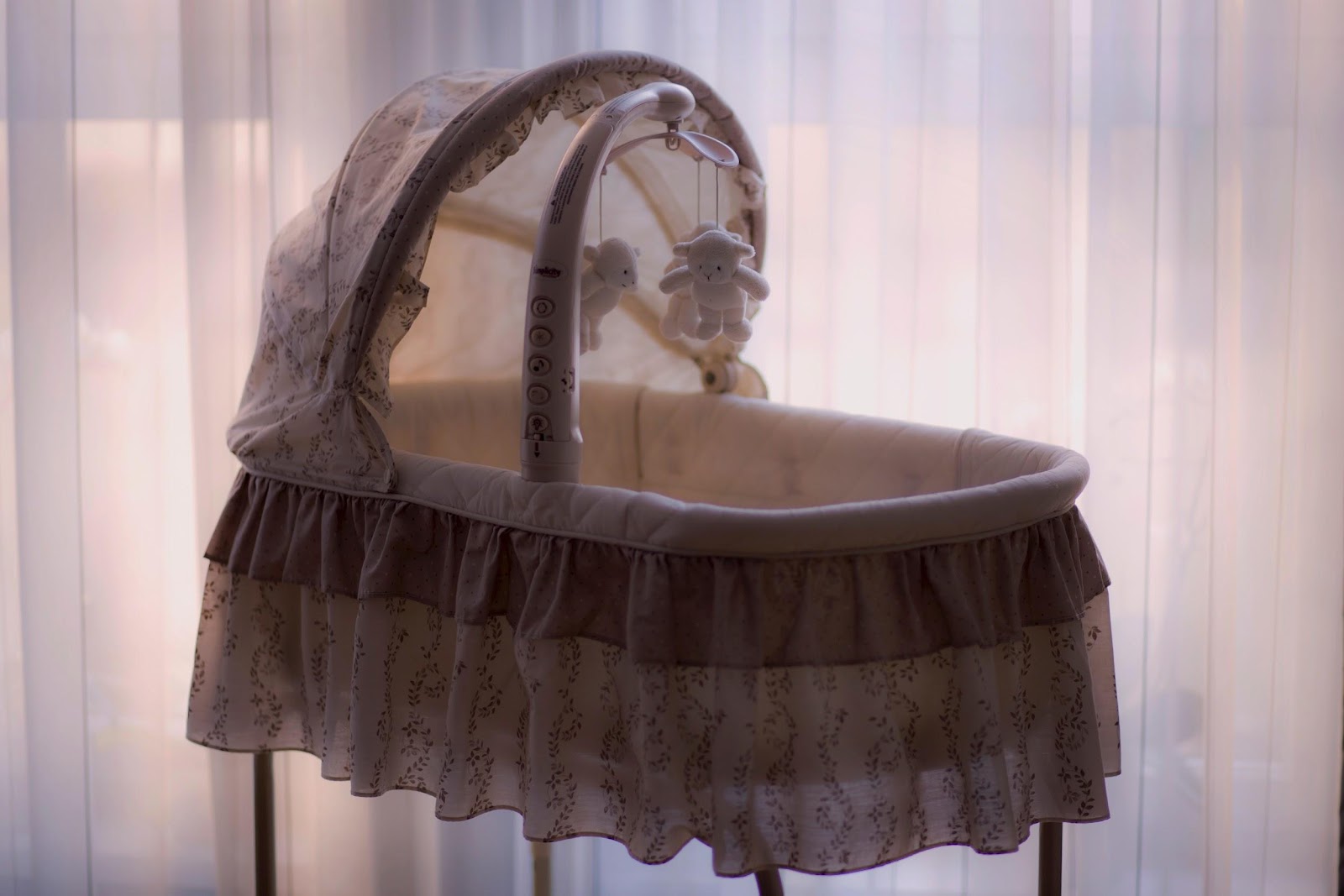
Photo Credit: StockSnap Pixabay


While a good estimate of how many of women with disabilities give birth each year doesn’t exist, experts know that more than 1 million women of childbearing age have a physical disability. Whether it’s multiple sclerosis, visual impairment, or cerebral palsy, these women need some assistance with daily living because of their disabilities. Preparing for a baby is exciting, but it’s also stressful and challenging even under the best circumstances. If you’re a parent with a disability who’s preparing for parenthood, follow some tips to ensure your life and home are as prepared as possible.

Obviously, your home will need to be baby-proofed, regardless of whether you have a disability. General home safety is the first step to take when preparing your home for parenthood. Ensure all smoke detectors and carbon monoxide detectors are working and that your home has an adequate amount. Also, ensure that you own a fire extinguisher and that large pieces of furniture and televisions are secured.

As your baby grows, the potential hazards will change, but for starters, all cords should be kept at least 3 feet away from the crib, and cords throughout the home should be secured. Keep in mind that any cord can be a hazard. As your baby approaches the crawling stage, you’ll need to cover electrical outlets and remove anything that plugs in, such as nightlights or air fresheners. Also, add padding to tables with sharp corners or edges, and install latches or locks on doors, cabinets and appliances. Continuously check the floors and reachable areas for choking hazards.

What you need in the home to help you care for your child will depend on your disability and its severity. Occupational therapists are one option, and they can help with bathing, changing, feeding, and carrying babies or children. You may also wish to hire a nanny in addition to or in place of an occupational therapist.

If you live with a disability, there is special equipment to help with everyday tasks if you have a baby or young child. For example, there are flashing alarms and intercom systems to help you know when your baby is crying if you’re hearing impaired. Visually impaired parents can benefit from harnesses that have easy-to-use straps and clips with contrasting colors to highlight adjustable parts. Cribs and playpens have adjustable heights for individuals with disabilities, and some feature removable side bars or panels.

When purchasing baby essentials, keep your disability in mind. For example, if you have a disability that affects your mobility or strength, look for strollers that are lightweight and easy to push and fold. Some models have adjustable handle height, and specialized strollers can be attached to wheelchairs. Select sturdy high chairs with adjustable heights and easy-to-use straps and clips.

As far as preparing your life, just be prepared that you may sometimes feel left out in your child’s care. Disabled parents describe their experience this way, as they may not be able to push the stroller or pick their child up if they fall. However, they also note that they find creative ways to hold smaller babies, such as in a sling on their front while in a wheelchair. Also, as the child becomes older and more independent, those feelings of being left out can fade.

You may wish to go ahead and decide how you’ll help your child to understand your disability. “Children are naturally curious and may have a lot of questions about your disability,” says Healthdirect. Openly discussing your disability with your child can help them understand your limitations or why your child could accidentally cause you pain if they aren’t careful. Discussing your disability can also help to teach them to be empathetic and insightful.

Use formal support services as much as possible. While acknowledging you need help may be difficult, receiving adequate assistance is imperative, as it can make things easier for you and your child. Also, welcome the support of friends and family, and reach out to a wider network of community support groups. Some disabled parents find counseling to be beneficial.

No parent is ever 100 percent ready for parenthood. Preparing your life and home for this kind of change is scary. You’ll wonder if you forgot something or if you got too much of another thing. Try not to stress too much. Parenthood is also highly rewarding. When you’re having a particularly rough day, you may find that the unconditional love from your child is just the medicine you need.


Contact: Ashley Taylor                                   


Introduce Social and Emotional Learning into a School


Many of you are at the stage of introducing new ideas to the PTA, we found this article on seven suggestions for getting others at your school on board with social and emotional learning. More and more Irish teachers, principals and board members' are embracing the importance of SEL. 

For social and emotional learning to become widespread in schools, those already dedicated have to bring in their hesitant colleagues. Award-winning journalist Steve Adubato has studied the process of getting buy-in in his book Lessons in Leadership (Rutgers University Press, 2016).

Seven Tips for Bringing People Around

Although Adubato’s book doesn’t focus specifically on education, I’d like to highlight some of his key ideas about buy-in and relate those to getting folks on board with social and emotional learning at your school. (All quotes are from his book, pp. 136-138.)

1. “Accentuate the positives, but don’t act as if there won’t be challenges,” Adubato advises. Remember, even if a change is challenging or difficult, many school staff and board members will accept it if they believe in you as a leader. Establish credibility and trust by recognizing the obstacles and challenges present, while communicating confidence that those hurdles can be overcome. Communicate that you’re not asking your colleagues to do something brand new. Other educators like them and in schools like theirs have implemented SEL successfully despite facing many of the same initial concerns, such as finding the time for lessons or worries about how to evaluate SEL progress.

2. Explain clearly how the status quo can actually be more dangerous and risky than the change. Change is difficult, so it will often seem easier to continue to do what we’ve been doing. As many of us know from our experiences in schools, overwhelmed educators are often operating in survival mode and resist change, taking the stance of “don’t rock the boat.” 

“Really good leaders make it crystal clear that the risks of not changing present concrete and serious problems; make it clear what the payoff or tangible benefits of implementing this change will be.”

So when a school doesn’t adopt social and emotional learning and restorative practices, it may continue to face discipline problems that affect student safety and morale and take up precious instructional time. So SEL leaders must provide evidence and a convincing argument to show how the boat is, in fact, sinking or how some folks below deck are drowning. It has to become apparent why curriculum and class procedures and systems must change.

Instead of forcing everyone to fit into a fixed mould, we should be allowed to explore what we’re passionate about’ (Fourth year, female,  co-educational school,  Co Dublin)

3. Change is personal, not virtual. “Too many organizations try to sell the change through detailed standard-operating procedure manuals or highly detailed descriptions of the steps needed to implement the changes." Extensive online resources, though valuable and well intended, are more likely to be daunting than helpful at the beginning of a change process. This happens in education as well (web searching “best practices in implementing SEL in schools” yields 3.8 million results). Before passing out any curricular materials or resources, an SEL leader must begin with a clear conversation about what the vision is, how things will look and feel once the changes have taken place, and why those changes will be beneficial to all—students and teachers. Buy-in never happens through “compliance, command, and control.” It happens through understanding. Then the details can be better grappled with.

"‘Not all students are the same – one size does not fit all.’ (Third year, male, boys-only school, Co Monaghan)


4. Take the position that making progress on SEL is not negotiable but that you’re open to feedback and suggestions about exactly what happens and how it happens. Change cannot be rushed. Buy-in is like a layaway plan: Ownership comes over time.  “Create an environment conducive to an honest dialogue, even if the feedback is difficult to hear.” When implementing a new system or program at their school, administrators must remember this: Don’t allow yourself to think that your way is the only way. Doubts exist, whether you think they’re justified or not. Open dialogue can be created in feedback forums, board meetings, emails, or a one-on-one with SEL leadership.

‘Help teachers to become more open-minded.’ (Second year, female, co-educational school, Co Waterford)

5. Those who are implementing SEL, or related curriculum changes, see things differently from those who are championing those changes. There are no magic or silver bullets in the change business. Successful change agents understand that they must understand and empathize with the position of their colleagues and act accordingly. One thing to be especially aware of is “change fatigue,” which is common in schools as a reaction when several programs are implemented simultaneously or even one program in a short time period. Even well-intentioned and necessary interventions have to be scaled down when they’re coming into a school, especially a school that has experienced a lot of programming changes and leadership or teacher turnover.

‘Make the teachers be happier in the environment not stressed and sad.’ (Fourth year, female, co-educational school, Co Cork)

6. “Celebrate and recognize any success or accomplishment associated with the change effort, no matter how small,” People want to be part of a winning team. Know that major change and victories are not likely to happen quickly. It’s important for leaders to remember that “real change about real problems and issues is a marathon, not a sprint.” Modelling patience, process, and progress will help foster SEL buy-in, especially in schools that link so much staff morale and worth to standardized test scores.

 ‘Have a proper system for mental health and exam stress... the availability of a designated person to discuss and facilitate issues and discussion.’ (Fifth year, male, co-educational school, Co Leitrim)

7. Don’t shy away from seeing yourself, and your like-minded colleagues, as leaders. Creating buy-in is a leadership activity, even if you’re doing it among your peers. You exercise leadership through your vision, passion, and commitment to students’ social and emotional learning and what it means for their future success in school, college, careers, community, and life. 

I would appreciate if there was one class a day just to take time out and focus on mindfulness and well-being’ (Fourth year, female, girls-only school, Co Cork)

The inserts are taken from the report Minister Katherine Zappone TD and Minister Richard Bruton TD  launched  ‘So, how was school today?’  A ground breaking piece of research carried out by young people for young people.
Read More


Go Blue for Buddy Bench


We know funding can be an issue for many schools so we have devised this "Go Blue for Buddy Bench" to help raise funds for a Buddy Bench and the Buddy bench Aware programmes. 
What does that mean?
It means that your school wants to become a place where children feel free, strong and comfortable in communicating how they feel to each other. The ask is that your child
Wears something blue on the designated day.

It’s their choice – jeans, jumper, club or county colours; wear a blue scarf, wear a blue bungee in their hair, they could even paint their face blue!

Donates €2
If at all possible from their own money box or does a chore because this is a child led initiative. All money raised goes towards your school’s fund for getting a Buddy Bench and the Buddy Bench Aware Programmes into your school, promoting friendship, kindness and emotional well-being for all.

How does it work?
The Buddy Bench, placed in the school yard or play area, can be used for children when they are new to the school, want to make new friends, their friends are not there on a particular day, they want to play something different from what their friends are playing, or they’re having a problem with their friends and just can’t solve it right now / want to take a break. Sitting on the bench lets everyone know you are feeling lonely, 'different', are being with your emotions and thoughts, and so others are free to check in with you and see if you're ok.

How do we know that children will understand how to use the Buddy Bench?
​We don’t just leave a bench in your school yard and leave it at that. Buddy Bench Ireland will also be delivering the Buddy Bench Program in your school.

Tell me about the Buddy Bench Programme!
As well as the Buddy Bench, we deliver 3 age-appropriate workshops Little Buddies aged 3-6, Buddy Bench Aware aged 6-9 and You Are a Hero for aged 9-12+. Using a combination of story, puppet show, discussions, self-awareness techniques and role-play, our workshops teach children about feelings:

To Read More......


What they are, how they change, how to express themselves, and how to listen to others.

Through supporting core competencies of empathy, creativity, mindfulness and communication, we are empowering a generation of children to create a world where it’s OK – i.e. normal, natural, easy and fun - to express yourself.

Your child will also get a lovely Buddy Bench Activity Book with original illustrations and a comprehensive set of creative activities that teach tools for self-assessment, coping and developing language for feelings.

To download the resources needed


Good Luck and we would love to see all your photos, email them us at hello@buddybench.ie there is prize !!!!!

How to Spot Depression in Children and Where to Get Help

Buddy Bench

It is one of the hardest things for a parent to cope with - to see your child suffering from mental health problems, with no real idea what has gone wrong or how you can help them. 

Signs of mental health problems in teenagers and children are sometimes dismissed as angst, but a recent UK Government-funded survey has revealed why we should be taking the issue much more seriously.

At the age of 14, a quarter of girls and one in 10 boys show signs of depression, researchers from UCL Institute of Education and the University of Liverpool found. The causes include stress, body image issues, bullying and social media pressure – all of which are typically experienced by teenagers and children in day-to-day life and may have a greater effect than you think.

Those from poorer or mixed ethnic backgrounds have a greater risk of showing signs, the survey of more than 10,000 children taking part in the Millennium Cohort Study found, while girls are more likely to suffer than boys.

Emma Saddleton, helpline manager at children’s mental health charity Young Minds, says: “Most young people experience ups and down during their teenage years and occasionally will feel down or upset by things going on in their lives. They might be adapting to a change in their family or school life, or just trying out new emotions, and will generally grow out of worrying behaviour.

“But some young people feel sad, lonely, down, anxious or stressed for longer periods of time to the extent that it can affect their everyday lives and can prevent that young person from doing things they would normally do.”

For early intervention, you should look out for the following signs:

1. A lack of motivation or interest
One sign of depression is a severe lack of motivation. This might come in the form of caring very little about their grades, showing little interest in hobbies, or even going out to see friends. Make note of what they’ve been enthusiastic about before, but may not be now.

2. A feeling of intolerance or irritation
Intolerance or irritation can be shown in a few different ways. They might cope by snapping or causing arguments more often than usual. Perhaps they’ve suddenly shown a sudden dislike to something or someone for seemingly no reason or frustration builds much quicker than it used to.

3. A feeling of hopelessness or helplessness
Look out for indications of helplessness in the things your child or teen says. They might think that nothing they can do will help improve their grades or improve relationships with friends. In some cases, they may become more reckless when thinking their actions no longer have consequences.

4. Lack of self-esteem
A lack of self-esteem can be evident in small actions that might be mistaken for typical teenage habits. Your teen might fret a lot over their outfits or appearance, constantly going back in to their room to change. They might worry over small outings such as going over to the shop for a pint of milk or meeting family friends.

5. Difficulty in making decisions
Although many people have trouble with making decisions, in an extreme case, this could be a sign of depression. Look out for signs of becoming easily frustrated or tearful when faced with a choice or decision.

6. They are no longer finding enjoyment in life
If your child or teen lacks excitement for things they would have previously enjoyed for a long period of time, this could be a strong indicator of depression. They might not care for an upcoming party or a meal they love. Become aware of how often they smile or laugh when watching TV or scrolling through their phones.

7. Changes in patterns of life
Other signs that may be easier to spot include changes in eating and sleeping habits. If your child or teen is eating or sleeping significantly more or less, it might be time to take the symptoms more seriously.

Useful Websites for Young People


https://www.jigsaw.ie/jigsaw-services/get-in-touch/

https://www.shine.ie/contact/

http://www.mentalhealthireland.ie/teens/


How to Explain Terrorism to your Child?


As parents, there is a constant temptation to shield our children from bad news. But sometimes, and in particular with acts of terrorism, bad news is unavoidable - it’s in on television, it’s on social media, and it’s on our minds.

Experts from the Royal College of Psychiatrists have advised that parents should be honest with their children about the Manchester terror attack. "We would not advise hiding your child from what may be on the news or social media," said Dr Bernadka Dubicka, chairwoman-elect of RCP's child and adolescent psychiatry faculty. "They will inevitably learn about it from their friends, so it's best to be honest with them about what has happened.

Yet how exactly do you go about explaining to a young child that 22 people have been murdered at a concert?

Language Matters

For children of all ages, the most important thing is to reassure them that they are safe. Don’t get into the political context with primary-aged children. That may come up in conversation with older children, but the importance at any age is offering the reassurance that they are safe.

For pre-school children, use concrete language: don’t say “This person went to sleep” or “We’ve lost that person” - because that could instil fear or anxiety in that child about going to sleep. And what does lost mean? They’re lost at the shops? Be accurate and mindful of the impact of your language.

Age-appropriate conversations

For pre-school, think about how much exposure they’ve had. Maybe they’ve overheard the news, so the conversation could be quite brief: acknowledge what has happened, and say that lots of people have died as a result of a really bad incident. You can say that we don’t know why this has happened.

As the parent or teacher or carer, the most important part is to offer reassurance: this is very unusual, there are lots of safety checks in place to protect us.

Use age-appropriate language, and be aware of what your child understands: do they really know what “died” means? It’s usually not until the age of 5 or 6 that children understand that death is permanent.

With primary school, the majority will understand what “dead” means. So it may be that you can add details - you may be able to sit down and watch the 6 o’clock news together.
The perpetrators

You should talk about a bad action or behaviour - not bad people. Ms Allen explains: “A lot of our work is with families bereaved through murder.

With children, you must be careful about the language: people aren’t bad - it’s something bad that they’ve done - this helps prevent anxiety in children, and fears that ‘bad people’ are coming to get them.”

Social Media Awareness

Secondary school aged children will have come across news about the attacks already on social media. Remind them that some of the things they have read there may be incorrect. Have a conversation with your child about what they think has happened.

Talk about the images they’ve seen - these can be more powerful than words.

If they see an image, and haven’t had a conversation with someone they trust, they will build up these images something that is so big that it’s unmanageable for them; you don’t want a child to start fantasising that someone is going to come after them.
Promote peace

When I have spoken to my children, who are primary and pre-school age, about previous terror attacks, I've tried to shift their focus towards the coming together people in the aftermath, and the work people around the world to keep everyone safe.

Shield them
This hysteria is exactly what the people carrying out these acts want. And it is exactly this sort of hysteria that we, as parents, need to protect our children from. Instead, this is the sentiment we need to spread: that the majority of the world wants peace.

KEY POINTS
  • This story is upsetting for children because they can imagine something like this happening to them or someone close to them.
  • The next few days might be more difficult as images of people grieving will be shown on the television, which can be upsetting for children and might trigger more questions.
  • It is very unusual that something like this happens. This is one of the reasons why it is on the news and lots of people are talking about it; it is also because it is very upsetting that something like this could happen.
  • Children find the idea of bad people particularly frightening. Children are also very fair-minded and will want reassurance that the person who did this has been caught by the police and will be punished.
  • This can be an opportunity to help young people develop their empathy and reflect on the value of life and relationships.

What if they ask why it happened?
If the children want to know ‘why?’ you could say something like:

‘No-one can completely know why. We know it wasn’t an accident. It’s so, so difficult to understand why anyone would be so cruel as to kill other people.’

If your children are scared they or you will die.
Try to answer with some solid reassurance, such as: "We don’t expect anything like this will ever happen here.

"If one of us died for any reason, you would always be looked after by ­­­­­­______ (the other parent/aunt/uncle/granny/family friend). I don’t expect to die for a long time yet’.

May the beautiful beings who lost their precious lives yesterday, rest in peace.


How Schools Cope After a Tragic Death !

buddy bench ireland

77 secondary students died by suicide last year and the impact on schools is enormous  

How can a school cope with that empty desk in the classroom? Just yesterday, the student was there. Today, they are gone, lost to suicide at a young age. The sudden death of a young person turns a school upside-down, leaving their classmates distraught and vulnerable.

Teachers have to help the students through the trauma and the principal needs to manage the crisis while ultimately returning to some kind of normality. It’s an enormous and highly sensitive task.
Last year, there were 77 suicides among secondary school students, with 66 boys and 11 girls losing their lives. The youngest was just 12 years-old. But it’s not the only crisis that can hit a school, with children, parents and teachers among those who can be lost to accidents or illness.

In 2005, five schoolgirls died in a Co Meath bus crash. Principals and teachers also deal with child abuse, community disasters and disappearances as well as robberies and violent crimes, students becoming ill and requiring medical attention and trauma from witnessing a distressing incident.

On Valentine’s night 1981, 48 young people died and 214 were injured in the Stardust disaster when fire engulfed a disco on Dublin’s northside, devastating the local community and many schools particularly in the north Dublin area.

Shane moran
Shane Moran, psychologist and school chaplain, with staff and students at Largy College, Clones, Co Monaghan
Shane Moran is a counselling psychologist, teacher and chaplain with 20 years of experience in education. Drawing on his experience, he has written a book, The Clouds That Can Surround A School, which focuses on responding to and managing a critical incident. It’s a timely, concise and necessary read for educators and, Moran hopes, will be a useful resource.

“A few years back, I was asked to attend a school after a suicide to help management cope with the trauma,” says Moran, who works in Largy College, a secondary school in Clones. “They really wanted to help the staff and students through this very hard time, but there was some chaos. The principal tried to take it on by himself, while other staff were left blind.

“So, using what’s known as the pyramid model, we focused on the most at-risk students and proceeded to get consent from parents to help them through the days ahead.”

Teachers wonder what they should do and whether they could have prevented a tragedy. Children struggle.

“A young person is talking to their friend one night and the next day they are dead. That is such a trauma,” says Moran. “We need to touch base with that student, reassuring them and assessing their mental health and to make sure they are not isolated. If I have concerns, I feed these back to the team.”

Critical incidents
Moran categorises critical incidents under the headings of yellow (relatively minor), amber (more serious) and red (very serious) and has been involved in nine red-level critical incidents.

With his support and guidance, Cavan-Monaghan ETB has developed a set of guidelines that swing into action when a school experiences a critical incident. It’s backed by a network of professionals and it is one that other schools and ETBs are looking to as a best-practice model.

In the days after the crisis, Moran meets with psychologists from the National Educational Psychological Service (Neps) and draws up an hour-by-hour plan. Memorials have to be addressed sensitively, some level of normality is best for the school and the most vulnerable staff and students need to be supported.

It’s a model built on bitter experience, with Cavan and Monaghan having experienced significant levels of tragedy in recent years. Addiction, social and family problems, inward migration from Dublin coupled with disconnection from the local community, poverty and unemployment and lack of local facilities have all played their part.
Social media

Moran believes the pressures placed on young people by social media have also contributed.

“I’m like a firefighter, dealing with the aftermath of crisis but I’d much rather we try to prevent the fires in the first place, and this requires investment in guidance counselling and student support,” he says.

“School is a second home and place of safety and stability for young people. When something happens to our kids, we feel this trauma here.”

In the days after a loss, the whole school feels what Moran calls the “wallop effect”. In the book, he outlines advice for principals in how to deal with the media, how to work with Neps, how to strike a balance between providing an outlet for grief and upending the school for weeks on end and, ultimately, how to return to normal.

“It is a tough time for the school but, in my experience, they become stronger after a severe critical incident. They pull together and become more resilient. The staff become kinder. There’s a shared solidarity and a sense that they can get through this together.”

The Clouds That Can Surround A School by Shane Moran is available on Amazon, and  in Eason’s.

With thanks to Shane Moran and courtesy of Peter McGuire (article author).


Why We Need To Make Mental Health Complusory in All Schools


Buddy Bench Ireland
Friendship & Empathy being key

Schools are where children and young people spend most of their day. It’s where friendships happen and where relationships form. It’s where they find their self-worth – in popularity, in sports, in achievements.
And it’s where mental health issues can become obvious – and exacerbated.
Every child will invariably have to deal with stress. It’s likely they’ll also encounter social exclusion, conflicts, or bullying at some stage throughout their lives.

Little Buddies Programme

It’s incredibly important that schools and parents are working together to prove the coping skills needed to live a hapy health life. It is vital that educating children and young people about mental health as a whole.

There’s a growing emphasis on schools providing mental health support. But in the majority of cases, this comes in the form of support only for children who directly ask for it.

Are we accepting that mental health is as important a part of life as physical health.?
PE lessons are compulsory in schools, because we view physical health as a crucial thing our children need to know about. We teach them about eating healthily, staying fit.

But are we ignoring the mental side of things –  and can then lead to the extreme situation were they feel so lost and unable to get help.

Everyone has mental health. Mental health is something that everyone will have to deal with at some point in their life, whether in terms of getting help with mental well-being, helping someone else, or dealing with stressful moments and challenges.

Schools need to be portraying mental health as equally important and crucial as physical health (because it is) – and that starts with making mental health education a compulsory part of education across all schools.

Temple Street Children’s University Hospital's Report

The finding is based on an analysis of the initial assessment forms of 111 children attending the family-based W82GO service at Temple Street Children’s University Hospital in Dublin.

It found that 12% of the children who were bullied were missing days from school. Almost half of those teased were teased by their peers, although a small percentage (2%) were teased by strangers.

Temple Street started its obesity service for children in 2004 and the following year set up the W82GO programme that is delivered by a multidisciplinary team that includes a paediatrician, dietitian, nurse, chartered physiotherapist, and clinical psychologist.


Dr Samantha Doyle, a paediatrician and a member of the W82GO Healthy Lifestyles Programme team, said their analysis revealed a high proportion of emotional and behavioural problems along with bullying.

About 5% of the children were under five years of age, and the average age at initial consultation was around 10 years.

A third (33%) of the children were experiencing emotional difficulties but just under half (46%) were linked to mental health services before starting the programme.

The initial assessment also showed that 26% had behavioural difficulties, with just over half (52%) already attending a mental health service.

Almost a third (30%) of parents said their children had learning difficulties, a figure that is well above the National Council for Special Needs Education estimated prevalence rates of 23% in 2011.

It also emerged that 15% of the children needed some intervention for development delay.
While the degree of developmental delay varied, speech and autistic spectrum disorder made up a large proportion of the difficulties.

The study, published in the latest issue of the Irish Medical Journal, points out that the findings are in contrast to the data collected by The Growing Up in Ireland study, published in 2011.

It showed that most of the nine-year-old children analysed were developing without emotional problems, with 15% to 20% in difficulty.

Early Intervention being Key

Children should learn about mental health from a young age, and wellbeing should also be a fundamental priority in every aspect of the education system.
Schools are critical in helping prevent mental health problems escalating, in building wellbeing and resilience and helping young people learn the skills they need to cope in today’s world.’

Lessons need to discuss mental health as something we all have to work on, teaching children relevant skills such as dealing with stress and change, understanding their own moods and thoughts, and recognising when to ask for help.

Wouldn't it be fantastic if all schools were  discussing mental health, breaking down stigma and misconceptions, explaining treatment options, showing young people that there’s nothing ‘wrong’ with struggling – that they’re not weak, or stupid, or failing because they’re finding things difficult – and creating an environment where students actually feel able to not only recognise when they’re dealing with mental health issues, but to ask for help, too.

It’s not just about tackling children’s mental health issues. It’s about equipping them for adult life.


.