Pages

Showing posts with label primary school. Show all posts

Introduce Social and Emotional Learning into a School


Many of you are at the stage of introducing new ideas to the PTA, we found this article on seven suggestions for getting others at your school on board with social and emotional learning. More and more Irish teachers, principals and board members' are embracing the importance of SEL. 

For social and emotional learning to become widespread in schools, those already dedicated have to bring in their hesitant colleagues. Award-winning journalist Steve Adubato has studied the process of getting buy-in in his book Lessons in Leadership (Rutgers University Press, 2016).

Seven Tips for Bringing People Around

Although Adubato’s book doesn’t focus specifically on education, I’d like to highlight some of his key ideas about buy-in and relate those to getting folks on board with social and emotional learning at your school. (All quotes are from his book, pp. 136-138.)

1. “Accentuate the positives, but don’t act as if there won’t be challenges,” Adubato advises. Remember, even if a change is challenging or difficult, many school staff and board members will accept it if they believe in you as a leader. Establish credibility and trust by recognizing the obstacles and challenges present, while communicating confidence that those hurdles can be overcome. Communicate that you’re not asking your colleagues to do something brand new. Other educators like them and in schools like theirs have implemented SEL successfully despite facing many of the same initial concerns, such as finding the time for lessons or worries about how to evaluate SEL progress.

2. Explain clearly how the status quo can actually be more dangerous and risky than the change. Change is difficult, so it will often seem easier to continue to do what we’ve been doing. As many of us know from our experiences in schools, overwhelmed educators are often operating in survival mode and resist change, taking the stance of “don’t rock the boat.” 

“Really good leaders make it crystal clear that the risks of not changing present concrete and serious problems; make it clear what the payoff or tangible benefits of implementing this change will be.”

So when a school doesn’t adopt social and emotional learning and restorative practices, it may continue to face discipline problems that affect student safety and morale and take up precious instructional time. So SEL leaders must provide evidence and a convincing argument to show how the boat is, in fact, sinking or how some folks below deck are drowning. It has to become apparent why curriculum and class procedures and systems must change.

Instead of forcing everyone to fit into a fixed mould, we should be allowed to explore what we’re passionate about’ (Fourth year, female,  co-educational school,  Co Dublin)

3. Change is personal, not virtual. “Too many organizations try to sell the change through detailed standard-operating procedure manuals or highly detailed descriptions of the steps needed to implement the changes." Extensive online resources, though valuable and well intended, are more likely to be daunting than helpful at the beginning of a change process. This happens in education as well (web searching “best practices in implementing SEL in schools” yields 3.8 million results). Before passing out any curricular materials or resources, an SEL leader must begin with a clear conversation about what the vision is, how things will look and feel once the changes have taken place, and why those changes will be beneficial to all—students and teachers. Buy-in never happens through “compliance, command, and control.” It happens through understanding. Then the details can be better grappled with.

"‘Not all students are the same – one size does not fit all.’ (Third year, male, boys-only school, Co Monaghan)


4. Take the position that making progress on SEL is not negotiable but that you’re open to feedback and suggestions about exactly what happens and how it happens. Change cannot be rushed. Buy-in is like a layaway plan: Ownership comes over time.  “Create an environment conducive to an honest dialogue, even if the feedback is difficult to hear.” When implementing a new system or program at their school, administrators must remember this: Don’t allow yourself to think that your way is the only way. Doubts exist, whether you think they’re justified or not. Open dialogue can be created in feedback forums, board meetings, emails, or a one-on-one with SEL leadership.

‘Help teachers to become more open-minded.’ (Second year, female, co-educational school, Co Waterford)

5. Those who are implementing SEL, or related curriculum changes, see things differently from those who are championing those changes. There are no magic or silver bullets in the change business. Successful change agents understand that they must understand and empathize with the position of their colleagues and act accordingly. One thing to be especially aware of is “change fatigue,” which is common in schools as a reaction when several programs are implemented simultaneously or even one program in a short time period. Even well-intentioned and necessary interventions have to be scaled down when they’re coming into a school, especially a school that has experienced a lot of programming changes and leadership or teacher turnover.

‘Make the teachers be happier in the environment not stressed and sad.’ (Fourth year, female, co-educational school, Co Cork)

6. “Celebrate and recognize any success or accomplishment associated with the change effort, no matter how small,” People want to be part of a winning team. Know that major change and victories are not likely to happen quickly. It’s important for leaders to remember that “real change about real problems and issues is a marathon, not a sprint.” Modelling patience, process, and progress will help foster SEL buy-in, especially in schools that link so much staff morale and worth to standardized test scores.

 ‘Have a proper system for mental health and exam stress... the availability of a designated person to discuss and facilitate issues and discussion.’ (Fifth year, male, co-educational school, Co Leitrim)

7. Don’t shy away from seeing yourself, and your like-minded colleagues, as leaders. Creating buy-in is a leadership activity, even if you’re doing it among your peers. You exercise leadership through your vision, passion, and commitment to students’ social and emotional learning and what it means for their future success in school, college, careers, community, and life. 

I would appreciate if there was one class a day just to take time out and focus on mindfulness and well-being’ (Fourth year, female, girls-only school, Co Cork)

The inserts are taken from the report Minister Katherine Zappone TD and Minister Richard Bruton TD  launched  ‘So, how was school today?’  A ground breaking piece of research carried out by young people for young people.
Read More


Progressive Education Competition


We at Buddy Bench  strive to become the leaders in progressive education here in Ireland,  social and emotional skills being key.

Emphasis on learning by doing – hands-on projects, expeditionary learning.
An integrated curriculum.
Strong emphasis on problem solving and critical thinking.
Selection of subject content by looking forward to ask what skills will be needed in future society.
Education for social responsibility and democracy.
Emphasis on lifelong learning and social skills.

In September 2017 we are running a nationwide competition to highlight  those hundreds of primary schools who intend to or are running amazing initiatives. We want to hear what your school is doing about being active, being aware of  mental health, keeping safe online and in general being a school that is conscious of progressive education with the element of social and emotional learning.

There is an amazing prize (sorry not disclosure yet), so if you think your school is forward thinking, child led and has support from parents, parents association's, teachers and an inspirational principals, do let us know about them..............

Email hello@buddybench.ie or comment below with a very short description of who is your school and what initiatives they are doing.

Thank You For Now.

Buddy Bench Aware Programme 7yrs - 9yrs

Buddy Bench Ireland
Churchhill NS Kilkenn


Buddy Bench Aware 7yrs - 9yrs

The school environment can be very stressful; in addition to any issues children bring from home, many struggle with a sense of their own difference and start to feel pressure to perform well in class.

Exclusion, isolation or fears of being left behind are very painful for any child, so we have built our Buddy Bench Aware Program around teaching self-awareness, friendship, empathy and self-expression, using the Buddy Bench as a visual aid.


The Workshop

"Look Up, Look Around and Look Out for Each Other”

Buddy Bench Ireland


Emotions v Feelings

What do emotions feel like and look like?
How can you tell what you’re feeling?

All people have feelings. Feelings help us learn about ourselves and others. All emotions are natural, so kids shouldn’t feel bad about experiencing them.

Through role play, our teaching story, discussion and self-awareness exercises, our facilitators help children reflect on their emotions, which sometimes feel overwhelming, and give simple tools for changing their relationship to their feelings.  We teach them to cultivate a kinder attitude to themselves and each other, demonstrating differences in body language, and cultivating skills for mutually supportive communication.

Buddy Bench Ireland
Learning to strengthen attention and regulate emotions are foundational skills that could benefit children in school and throughout their whole lives.


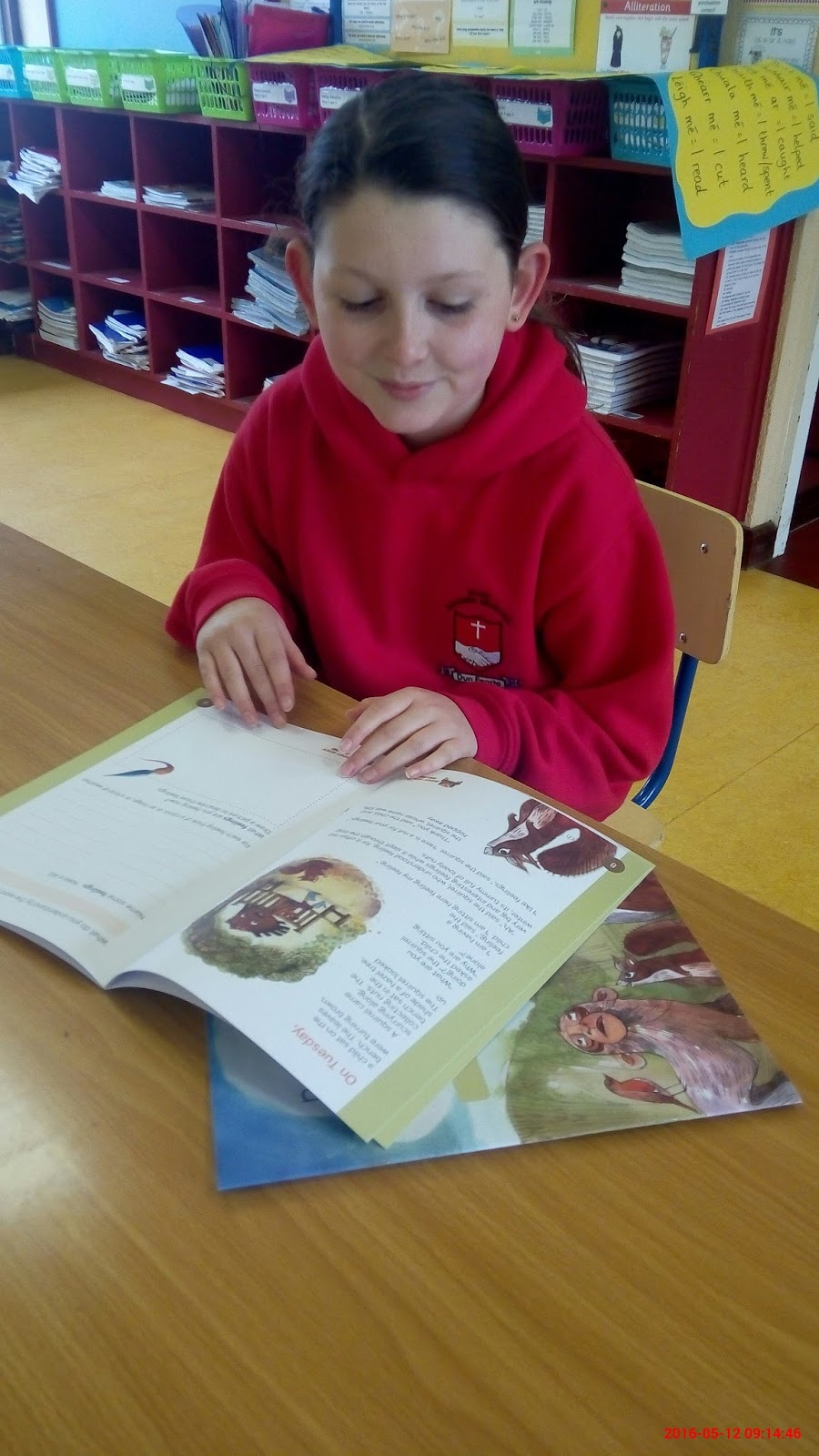
Each child receives a copy of our beautifully illustrated interactive workbook featuring teaching story and creative activities that give opportunities for developing a vocabulary around feelings, and a positive attitude about asking for help.

You can read along and join in the questions too!

The feedback from our programmes is very promising – we are currently completing an evaluation with the Mental Health Social Research Unit at NUI Maynooth. According to teachers’ ratings, children show more empathy and kindness and a greater ability to calm themselves down when they feel upset. Their social and emotional development has improved, the children showed improvement in the ability to think flexibly, and had cultivated the life skills that have been linked to health and success in later life.

Buddy Bench Ireland
You are our Heros
Combined with the Buddy Bench as a visual tool in times of distress, the children were able to find comfort and support through each other rather than feeling upset and worried. It’s these small changes, spread across classrooms, that could make society more kind—and educate a new generation of more compassionate and connected adults.


To book us to come to your school and deliver any of our programmes email:hello@buddybench.ie
or call us on (0560 7702027


You are a Hero Programme 10yrs - 12+yrs


buddy bench ireland
Happy Hub Cork City


You are a Hero Age 10yrs - 12+yrs

The school environment can be stressful; in addition to any issues children bring from home, as children grow older they become extremely sensitive to their place in peer groups. At the same time, a greater awareness of the larger world around them can cause children to become vulnerable to anxiety. 

At this age, friendships are key to a child’s self image, and the responsibility of becoming a role model to younger children in the school can bring out the best in the senior classes in a school.

The Workshop
You are a Hero!
Friendship: How can you be a good friend to others? 


You can’t be there for others if you don’t take care of yourself first!

Children are extraordinarily observant, and as they move outward into the world they want to take responsibility for their own wellbeing and that of other people, animals, the environment and so on.

Through discussion and role-play we introduce the idea that a real hero has self-awareness, can understand their own feelings and cultivate positive habits of thought, cares for their own mental health, knows their own strengths and develops skills to match, asks friends how they are doing, and knows how to listen well.
The You are a Hero! Activity Book gives tools for personal and social resilience, and invites children to become members of our Hero Club, ambassadors for friendship and self-fulfilment as they move towards adolescence.

"There is a page in the back of this workbook we ask the children to fill in and send back to us to receive their You are a Hero badge and a to be chance of winning a bigger prize, this can be done on an individual basis or as a class project. We want to hear the children's' voices we need their feedback."

The feedback from our programmes is very promising – we are currently completing an evaluation with the Mental Health Social Research Unit at NUI Maynooth. According to teachers’ ratings, children show more empathy and kindness and a greater ability to calm themselves down when they feel upset. Their social and emotional development has improved, the children showed improvement in the ability to think flexibly, and had cultivated the life skills that have been linked to health and success in later life.

Combined with the Buddy Bench as a visual tool in times of distress, the children were able to find comfort and support through each other rather than feeling upset and worried. It’s these small changes, spread across classrooms, that could make society more kind—and educate a new generation of more compassionate and connected adults.

In this workshop we ask that there be a small number of pre-chosen Buddy Ambassadors chosen from 6th class approx. 2 per hundred other students in the school., they can alternate.  Their role will be to look after the younger children and monitor the Buddy Bench is being used correctly (within reason). Through our own internal evaluation we have found the more responsibility the children are given the better the outcomes.

To book us to come to your school and deliver any of our programmes email: hello@buddybench.ie
or call us on (0560 7702027


Transition Buddy (6th Class Only)


buddy bench ireland
Transition Buddy


After eight years of being sheltered in  one-room, one-teacher mode of primary school and familiar friends children in sixth class will be  thrust into a timetabled world of multiple teachers, classrooms and subjects, and a whole new group of peers.

These children were sixth class, governing over the younger children; now they will be at the bottom of the heap, conspicuous in their brand new, over-sized uniforms bought with an eye for "room to grow".

Apprehension as well as excitement is natural – not only for the first-year pupils but also their parents. If it's your first child to make this leap in the education system, you may have that "newbie" feeling too.

This can be a difficult yet exciting stage in a young person's life, with adequate communication skills and coping mechanisms the journey need not be so difficult. We have developed the Transition Buddy programme for sixth class students to allow them move along from the safety of their primary school to their new adventure to secondary.

Challenges

Worrying about how your child will cope with all the challenges of secondary school may be coupled with uncertainty about your own role as a parent in these changed circumstances.  Parents report the adjustment of having less involvement in their child's day to day routine and less knowledge of their children's new friends as an adjustment they have to make too.  This time also coincides with the rite of passage that is teenage discos, which brings a whole new level of peer pressure they may have not experienced before.  

How do you strike a balance between under- and over-involvement, between providing support and being a suffocating "helicopter" parent?

The pre-teen is faced with a wide array of new subjects, with the pressure of having to make decisions about which ones to choose at the end of the year.  Having to absorb all these new changes and information can be overwhelming.

Research shows that, in the hiatus caused by the move from primary to secondary school, "a high proportion of kids suffer educational progress deficit – something about the transfer from one set of educational parameters to another causes them to dip in their educational attainment.

Most schools are doing much more these days to smooth the way for first-year pupils, with induction programmes, mentoring by older students and bringing them in for a day before the rest of the school's pupils return. Before the end of June, the schools should have received the now compulsory "Education Passport" for each  from his or her primary school.

Our Transition Buddy Programme

It's All About Friends!

While friendships can occasionally be difficult, pre-teens need friends, and having friends will help them deal with all the challenges associated with secondary school. Below are some common friendship problems your child might encounter, along with a few simple solutions to help solve them.


Being Excluded: For many pre-teens, their biggest fear is being socially excluded or ostracized from friends and peers. They desire to be a part of a group, and without one, they feel lost. To make matters even more complicated, many pre-tween experience friendship problems in school, and may actually lose a friend or two in the process, even long-term friendships may suffer.

Dealing with Bullying: We educate your child about bullying, and give him or her ideas on how to handle a bully should he or she come face to face with one. We discuss that good friends don't bully, or try to manipulate others. Good friends also don't torment their friends. Helping pre-teens know the difference between a good friend and a bad one is important information they will need throughout adolescence.

Being Dumped: Rejection is never easy, even for adults and it's especially difficult for pre-teens and teens. Sometimes children are rejected, even by long-time friends, or dumped in favour of more popular kids It's also possible for friends to grow apart during school, as interests change or develop.  We discuss that sometimes friendships don't last, and point out friends that are still there for him or her.

Positive Mental Well Being


Children are extraordinarily observant, and as they move outward into the world they want to take responsibility for their own wellbeing and that of other people, the environment and so on.


Through discussion and role-play we introduce the idea that a real hero has self-awareness, can understand their own feelings and cultivate positive habits of thought, cares for their own mental health, knows their own limitations and strengths and develops skills to match, asks friends how they are doing, and knows how to listen well.

This Transition Buddy programme gives the young person the tools for personal and social resilience, and invites children to become members of our Hero Club, ambassadors for friendship and self-fulfilment as they move towards adolescence.

Some of the topics we cover are:

  • Understanding Feelings
  • Know Yourself
  • Body Scan
  • Move Your Mood
  • Take Care of Yourself
  • Be Yourself
Young people can learn in times of distress, that they are able to find comfort and support through each other rather than feeling upset and worried. It's these small changes, spread across classrooms, that could make society more kind—and educate a new generation of more compassionate and connected adults.

To book us to come to your school to deliver the Transition Buddy programme to your sixth class email us on hello@buddybench.ie or call (056) 7702027


The feedback from our programmes is very promising – we are currently completing an evaluation with the Mental Health Social Research Unit at NUI Maynooth. According to teachers' ratings, children show more empathy and kindness and a greater ability to calm themselves down when they feel upset. Their social and emotional development has improved, the children showed improvement in the ability to think flexibly, and had cultivated the life skills that have been linked to health and success in later life.

Buddy Bench Aware Programmes


Buddy Bench Ireland
Our Buddy Bench Aware programmes are school-wide social and emotional learning programmes that helps children manage their behaviour, develop empathy and compassion, build positive social relationships, and understand and cope with their feelings. Children have taught us their needs and milestones change dramatically throughout the school duration, therefore our team of psychotherapists have designed four different age appropriate programmes.

  • Little Buddies age pre-school 3-6
  • Buddy Bench Aware age 7-9
  • Buddy Bench Hero age 9-12
  • Buddy Bench Post Primary 12+
All children deserve good mental health. That's why we have adapted our school programmes for children with Special Educational Needs.
We use a Buddy Bench as a visual tool to help instil much needed lifelong coping skills which is the objective of our Buddy Bench Aware programme. Our thoroughly researched program has been designed by our team and in-house psychotherapist Judith Ashton BA ITEC MFPhys IMTA, who has over 30 years expertise in her field. For the younger children the story in our interactive workbook, written by our Creative Consultant Jeffrey Gormly and illustrated by the very talented Ross Stewart of Cartoon Saloon. It is a story with animals and each animal represents a thought or a feeling but is creative and innovative , being open ended leaving so much to the individual child's imagination. Through our research if a buddy bench is placed in playground without a program it very quickly becomes an attractive climbing frame.

We, as a team of psychotherapists physically visit the school or organisation, our programmes are designed to allow and encourage a child to "feel a feeling" or to "think a thought" we know it is vital that a trained person is present and can identify a situation or problem if it arises, they will then flag a teacher/worker so they can decide if further intervention via the school or the organisation is required.

We are connected with the Ir​​ish Men's Sheds on a national level, you can source a bench through them for a cost of approximately €150  which includes a donation to each of the sheds. www.menssheds.ie

Book our team to come to your school and deliver our Buddy Bench Aware programmes which entwines heavily with SPHE. Each sessions is 45 mins in duration which consists of reading our story, role play and/or games which is delivered by our trained staff. Each pupil receives his/her own copy of the interactive workbook to be completed at school or even with the help of their family at home.

"A state of well-being in which the individual realises his or own abilities, can cope with the
normal stresses of life, can work productively and fruitfully and is able to make a contribution to
his or her own community". (WHO, 2001, p.1)

Some of the photos of us Buddy Benchers delivering the "Buddy Bench Aware" programme. These bright as buttons children really got the messages behind the story and really embrace it.

The ethos behind our program is :

LOOK UP, LOOK AROUND, LOOK OUT FOR EACH OTHER


Buddy Bench Ireland


Buddy Bench Ireland

Buddy Bench Ireland

Buddy Bench Ireland

“We have begun to see positive changes in behaviour, better use of problem solving conversations, reduced discipline incidents, and improved feelings of safety from bullying among our children,” said  Lydia Coyne.

After implementing the programme, children knew techniques to solve problems with classmates and ways to “cool off” and manage anger-related emotions." said  Michelle Coleman


What Makes a Child Fidget?

Judith Ashton In-house psychotherapist Buddy Bench

I have recently delivered our Buddy Bench Aware Programmes to several Irish primary schools and have noticed a great deal of fidgeting going on. The junior and senior infants being the “worst offenders” and this activity set me wondering about fidgeting. What it is and why does it happens?
More and more children are being diagnosed as having Attention Deficit Hyperactivity Disorder. When I was a child decades ago such a label did NOT exist. How come it does now? Could fidgeting be a symptom of some deeper issue?
Years ago when my own children were small I remember thinking how un-natural it was to expect a 3 -6 year old to sit still for hours on end when the natural language of a child’s young body is movement, feeling and touch ; these are their means of exploring the world of wonders into which they have recently arrived. If you watch any nature programme about young animals they are all either moving , playing, exploring, eating or asleep…. Rarely still.
In our present state educational system, children are expected to pay attention by sitting still in an un-naturally upright position for long periods of time. Kids are naturally full of energy and quite literally have energy to burn .There are numerous natural body positions for young children eg.  lying down, moving, dancing, rolling, climbing, tumbling, clowning, wrestling, jumping, skipping, hopping, spinning round, twisting, turning, falling and so on. Sounds familiar?  As a kid I never walked, I ran! I was constantly in motion. These days, many children lead sedentary lives and whilst in playgrounds are banned from chasing games, running , leap-frog,  skipping ropes, hop, skip and jump etc for fear of falling and litigation. Even the humble sand pit where digging and building used up energy has lost its place in childhood activities for fear of grains in young eyes!
The fact is,  many children are simply not getting enough exercise. Gone are the days of the long daily bag-carrying trek to school,  the parental taxi now drops kids from door to door rain or shine. Admittedly, children can be vulnerable if walking alone yet some urban schools have instigated healthy “crocodile programmes” where children and parents meet up and walk to school together. What a great idea… exercise and saving petrol all in one go!
Research from the early 1980’s shows that children  back then , had good core strength and good balance because of movement and mobility. Today only 1 in 12 children has good core strength and balance. What is this telling us about our children’s developing bodies? I am convinced that it’s because they are not moving enough or getting enough exercise, and I believe that this is why many are fidgeting and getting ADHD diagnoses.
Movement is not an option for a healthy body and mind but an essential part of daily activity. Children need to move in a multitude of ways for most of their waking hours not just using short bursts of energy at regulated times. All young animals need to move and explore with their bodies to make sense of the world around them. Many children are walking about with very poor co-ordination due to restriction of movement. Poor hand eye co-ordination and balance issues can be improved by ball throwing and catching and lots of cross lateral movements like skipping, crawling and hopping. Organised sports sessions after school and weekends are fine but movement needs to be frequent, intense and regular. For optimum health, kids need to get out of breath, sweat and get tired out. In short they need to let of steam … this will strengthen their developing bodies and diminish build- up of emotional pressure, this is good for healthy relationships, self- esteem and encourages healthy tiredness which in turn leads to healthy sleep patterns. Exercise also oxygenates the brain making children more alert, motivated and receptive to learning.
Children who lack exercise are not able to function properly on many levels. All the systems in a child’s body crave exercise and its myriad of benefits for growth, positive stimulation and optimum function.  : the child’s skeleton, the muscles, the digestive system, the nervous system, the lymphatic system etc. are all enhanced .
Inhibiting children (especially the youngest ones in schools) from moving by forcing them to conform to stillness and making them pay attention, is to rob them of the joys and benefits  of movement which are their rightful and natural states during childhood. Making them endure un-natural stillness and silence is bound to create trouble down the line for both mind and body. I believe this un-natural lack of movement and exercise is the root of much fidgeting and a possible over- diagnosis of ADHD.
In conclusion, to learn and to get the most out of school, children  need to be able to pay attention. To enable them to pay attention we need to encourage our kids to move, walk, run, hop, skip, jump, climb, fall, dance and twist and turn. In other words to mobilise every part of their body as often and as much as possible so that they can be happy, well balanced , healthy, sleep well at night and fidget less during the day.
Even better you need to join your young kids in all the above mentioned activities. Go for it, enjoy and have lots of fun …..
Judith Ashton 21/09/2016

Helping Your Child Cope with Back-to-School Anxiety


We don't want to acknowledge the fact that summer is nearing an end and we must at least start thinking of returning to school. Not only the young children who are starting school/pre-school may begin to feel anxious, lets face it is the topic of conversation, but older children and teens. Do you remember starting a new job?

Anxious feelings are normal and expected during times of transition or change.  This transition can be stressful and disruptive for the entire family! Prior to the first day of school, your anxious child may cling, cry, have temper tantrums, complain of headaches or stomach pains, withdraw, and become sullen or irritable.Worries are Common. Anxious children and teens worry about many different school-related issues, such as teachers, friends, fitting in, and/or being away from their parents. Some common worries include:


Who will be my new teacher?
What if my new teacher is mean?
Will any of my friends be in my class?
Will I fit in?
Are my clothes OK?
Will I look stupid?
Who will I sit with at lunch?
What if I miss the bus?
What if I can’t understand the new schoolwork?
What if something bad happens to mum or dad while I am at school?


Although it is normal for your child to have worries, it is crucial to make your child attend school. Avoidance of school will only increase and reinforce your child’s fears over the long-term, and make it increasingly more difficult to attend

Most importantly, anxious children and teens who miss school cannot gather evidence that challenges their unrealistic and catastrophic fears.

How To Deal With Back-to-School Worries!

Below are some general strategies parents can use to deal with back-to-school worries, followed by a schedule leading up to the first day of school.

Look after the basics.
Nobody copes well when they are tired or hungry. Anxious children often forget to eat, don’t feel hungry, and don’t get enough sleep. Provide frequent and nutritious snacks for your child. During this time, you also need to build in regular routines, so that life is more predictable for your child. These routines can involve the morning and bedtime habits, as well as eating schedules.

Encourage your child to share his or her fears.

Ask your child what is making him or her worried. Tell your child that it is normal to have concerns. Before and during the first few weeks of school, set up a regular time and place to talk. Some children feel most comfortable in a private space with your undivided attention (such as right before bed, or during mealtime). Teens often welcome some sort of distraction to cut the intensity of their worries and feelings (such as driving in the car, or taking a walk).


Avoid giving reassurance...instead, problem-solve and plan! Children often seek reassurance that bad things won’t happen in order to reduce their worry. Do not assure them with “Don’t worry!” or “Everything will be fine!” Instead, encourage your child to think of ways to solve his or her problem. For example, “If (the worst) happens, what could you do?” or “Let’s think of some ways you could handle that situation.” This gives you the opportunity to coach your child on how to cope with (and interpret) both real and imagined scary situations. You will also be giving your child the tools he or she needs to cope with an unexpected situation that might arise.

Here’s a sample script for engaging your child in problem-solving and planning (instead of giving reassurance):

Role-play with your child. Sometimes role-playing a certain situation with your child can help him or her make a plan, and feel more confident that he or she will be able to handle the situation. For example, let your child play the part of the demanding teacher or bullying classmate. Then, model appropriate responses and coping techniques for your child, to help them calm down.

Focus on the positive aspects!

Encourage your child to re-direct attention away from the worries, and towards the positives. Ask your child, "What are three things that you are most excited about on your first day of school?" Most kids can think of something good, even if it's just eating a special snack or going home at the end of the day. Chances are that the fun aspects are simply getting overlooked by repetitive worries.

Pay attention to your own behaviour. It can be anxiety-provoking for parents to hand over care and responsibility of their child to teachers. Children take cues from their parents, so the more confidence and comfort you can model, the more your child will understand there is no reason to be afraid. Be supportive yet firm. When saying goodbye in the morning, say it cheerfully – once! Ensure you don’t reward your child’s protests, crying, or tantrums by allow him or her to avoid going to school. Instead, in a calm tone, say: “I can see that going to school is making you scared, but you still have to go. Tell me what you are worried about, so we can talk about it.” Chances are, your child is anxious about something that requires a little problem-solving, role-playing, planning, and/or involvement from the teacher.

Timeline Leading Up to the First Day of School
(You may not need to take all of these steps)

At least one week before:
Start your child on a school-day routine – waking up, eating, and going to bed at regular times. Explain that everyone in the family needs to adjust to the new schedule, so he or she doesn’t feel alone with these changes.
For older children who having troubles getting up and out of bed, give them a “big person” alarm clock, and let them practice using it.
Ask your child to help plan school lunches for the first week.
Create a list of school supplies together and plan a fun shopping trip.

A couple days before school:
Go to school several times – walking, driving, or taking the bus. For young children taking the school bus, describe and draw out the bus route, including where the bus goes and how long it takes to get to school. Talk about bus safety.
For new students, take a tour of the school. Show your child the classrooms the and the bathrooms. If possible, meet your child’s teacher with your child present.
Ask your child to help choose the outfits for the first week of school. Let your child wear his or her favourite outfit on the first day.
Together with your child, pack up the schoolbag the night before.
For younger children who are nervous about separating, suggest taking a special object to school that reminds him of home. A reassuring note in a child’s lunch can also help ease separation anxiety.

The first day of school:
Have your child go to school with a friend for the first couple of days.
Tell the teacher that your child is having some separation anxiety – most teachers are experts in this area, and have years of experience!
Most importantly, praise and reward your child for brave behaviour!


Understanding Friendship For Children

Parents can provide love and support that make it possible for your child to meet new people and make friends.....

When we come to the topic of friends, one thing is clear: everyone needs friends. I remember my childhood full of constant change of rental houses, resulting in me making new friends again and again. I was a very reserved child. Making friends was difficult for me. Even when I finally made some friends, it was time to move, again. This was one thing that I hated the most. For me friends and friendship was special and I believe it is special for every child.

The word 'friends' is so commonly used that people usually take it as something normal and not see its significance for a child. So what exactly is a friend? If you go by Aristotle's definition, "It's a single soul dwelling in two bodies". So much so that best friends acquire each other's behaviors and mannerisms, language and preferences. I remember while in school our whole group had the same type of handwriting. We even enjoyed same kinds of songs and similar sports.

Friends promote mental health and overall wellbeing for children of all ages. Friends and friendship is important for their social and emotional development. Just by having friends, children learn to relate with others, as they teach each other skills of being a good friend, and acquire social skills at the same time. Most children want to have friends. Children with friends are likely to be more confident and academically sound. Children constantly learning positive friendship skills are found to be happy and confident. These children are constantly making and retaining friends. Having said so, we rarely observe the development of friendship.

Friendship in children starts really early following their development growth and their perception of friendship varies with age. Up to one year just looking, smiling, touching and imitating do the job very well. As the child grows, the criterion for a friend gradually changes. Children between three to six years of age consider those who do something that pleases them as friends. For them friends are momentary playmates and friendship is about just having fun. They assume that other children think the same way. Hence they become upset when their friend has a different opinion, resulting in temporary conflict.

Children between five and nine years consider someone a friend if s/he gives them nice presents, shares things regardless of whether it's toys, time, games, experiences and feelings. Now children gradually learn that they can have their social needs met and they can meet others' needs too. This is also the time they start considering others' feelings and are interested in knowing how other people think about issues and objects. Indicating that they are gradually growing, they start caring a lot about friendship. Sometimes children from this age group tolerate someone they don't like just because they want to make new friends. Sometimes they might even use friendship as a bargaining chip. The next level of friendship includes fairness and cooperation and playing by the rules. This includes age group seven to twelve years.

For this age group close friendship is not just mutual exchange, but based on well-matched needs and skills, which change as they grow. They are able to consider a friend's perspective in addition to their own, but not at the same time. That means they understand turn taking, but they can't really step back and get an observer's perspective that would allow them to see patterns of interaction in their relationships. They are concerned about fairness and reciprocity. If they do something nice for a friend they expect that friend to do something nice for them at the next opportunity. If this doesn't happen, the friendship is likely to fall apart. Children in this stage are somewhat judgmental of both themselves and others.

Next level of friendship includes intimate, mutually shared relationships; this is also caring and sharing stage. Children aged eight to fifteen years are very much into solving each other's problems among friends; they also share and confide thoughts and feelings with each other that they don't usually share with others. They are familiar with compromising and genuinely care about each other's happiness.

They place high value on emotional closeness with friends and even accept and appreciate differences between themselves and their friends. Not being possessive, they're less likely to feel threatened if their friends have other relationships. Showing signs of mature friendship that emphasizes trust and support while remaining close over time. I know at this point you are thinking, 'Can parents contribute to this process?'

Yes, it's the parents who contribute actively in preparing the child to interact successfully with his/her peers because a child is born without social skills. Parents help build key social skills that help with friendship. These include cooperation, communication, empathy, emotional control and responsibility. In the process, parents and caretakers can provide children with opportunities to play with peers to gain experience and learn important social skills.

Parents are the coaches who teach positive social skills to their children, and help children use new skills in real-life situations. The most important thing for a parent is to help children solve friendship conflicts. Talking about problems with a supportive adult helps children think rationally about what happens, how they feel about it and what to do next. Thinking things through helps to build more mature social skills.

Finally, if as a parent you are concerned about your child not making enough friends, consider this: it is entirely possible that your child has a different social style to yours. You can play a crucial role in your child's social development. You can be a good role model but you cannot make friends for him/her. You can however provide your love, patience, and support that make it possible for your child to meet new people and make friends on their own. Now that is not too much of an expectation from a parent. Or is it?


Want Your Child to Feel Good About Themselves? - Follow Five Golden Rules


courtesy of http://www.huffingtonpost.co.uk/dr-kathryn-weston/want-your-child-to-feel-good-about-themselves_b_9689354.html

As a parent we do our best for our children every single day, we too are human and we can make mistakes and if like me I worry could I be a better parent, am I am spending enough quality time etc.....the mind chatters on. 

I found this article to share with you, just as guidelines, The years go by quickly so enjoy !

Most parents intuitively know that children need to feel good about themselves to be happy and to progress in life - the same applies to adults - but practically speaking, how does this work? What do we need to be doing or saying to our children to ensure that they grow up to be happy adults, with a strong 'sense of self' and the ability to take on the world?

(1) Get on with your partner

No-one is pretending that it is easy to sustain a long-term relationship with someone whilst raising children but don't be in any doubt: how you 'get on' with each other has a massive impact on how your child feels about themselves. Recent research by theEarly Intervention Foundation shows that unresolved inter-parental conflict can seriously affect children's long-term mental health and well-being. Witnessing ongoing and unresolved conflict can cause children to be aggressive, hostile and even violent. It contributes to the development of low self-esteem, anxiety and depression. It can also badly affect their performance in school and the development of emotional and social skills.

So what can you do?

If things are ticking along nicely for you as a couple, keep to these few pointers and you hardly go wrong; make your partner feel valued, as an individual and as 'the parent'; show your children what love 'looks like' between you; try to present a united front when dishing out the discipline, and most importantly, keep bigger disagreements until the kids are out of earshot.

If you are separated or in a difficult relationship with your partner, the latter rules still apply, but your child will need help navigating through the experience of living between two parents, homes, bedrooms and sets of family dynamics. Splitting up doesn't have to be a negative experience for children, but only if parents make their child's well-being the top priority.

Whatever your family set-up, don't be afraid to give your relationship an MOT orspring clean. Counsellors and couple therapists are there to help keep happy couples on track, as much as to sort out crises.

(2) Help your child shape their self-story

During pregnancy and throughout childhood, parents instinctively gather pictures of their children as they grow and develop. Pictures of our children are among the most precious of family artefacts and often listed among the 'first thing people would rescue from a house fire!' Besides being a record of family events, these images serve another critical function: they help shape children's emerging sense of self and belonging in the world. They tell the story of how our child was welcomed and wanted, and reveal the physical places and people that played a role in their early childhood. They document our children's physical progression and highlight their early achievements and milestones.

As parents we tend to focus on the future, but there are gifts in retrospection. Photographic material, film and family stories help create both self-identity, and family identity. They provide a foundational resource from which a child's positive self-esteem emerges.

In families where there may have been relationship breakdown, illness or death, a recalling and documenting of the past, with positive guidance from a loving parent or carer can help children move forward securely. Remember when you are cuddled up flicking through phone snaps or recounting family stories over the dinner table, emphasis joy and resilience. As a family, look forward to the next chapters of family life, as yet unwritten. Relish retrospection whilst conveying a sense of excitement about the future.


(3) Nip 'weeds' in the bud


It is normal for families to go through peaks and troughs throughout the year, but when issues arise for your child that are persistent and that affect the quality of their day-to-day life, parents need to tackle the problem head-on. Issues such as anxiety,problems with sleep and consistently poor behaviour at school, for example, are common 'weeds' that need to be nipped in the bud. Otherwise, what may start out as a small problem, can end up escalating badly, affecting siblings and other family members. Remember: whatever the issue, face-to-face help is out there or the end of a phone.

(4) Don't underestimate the power of modelling


'Modelling' is a concept frequently referred to by educators, but it lies at the core of great parenting too. It refers to how we model attitudes, behaviour and approaches to the children who live or work closely with us. Young children learn through observation and quickly absorb how their caretakers approach difficulties, relationships, good news or personal challenges. They learn how to respond, behave and even 'what to say' in each scenario, from us. As parents, our role is pivotal in shaping how they respond to the world around them so it makes sense to reflect on how we approach everyday challenges as individuals. Consider how you cope and react to being stuck in a traffic jam for example, right through to how you manage the loss of a loved one. However parents respond - rest assured your off-spring are watching and learning. 

(5) Tell them that you will always love them, no matter what


No matter their age, whether they are six or sixteen years old, children need to know that you won't stop loving them, no matter what happens in life, and no matter the path they take. Of course we work hard to help them steer a good course throughout childhood and the teen years, and understand that it isn't always easy for them. However, their knowledge of our unconditional love gives children a good dose of self-worth and the inner strength to face any life obstacle. A child's self-esteem is carefully constructed over time (imagine a wall made from Lego) brick by brick, its strength against life's knocks reinforced by strong parental attachments steeped in love, affection and reassurance.

Finally, please remember that years and years of research by psychologists and educators shows that the earlier you follow these tips, the better.